
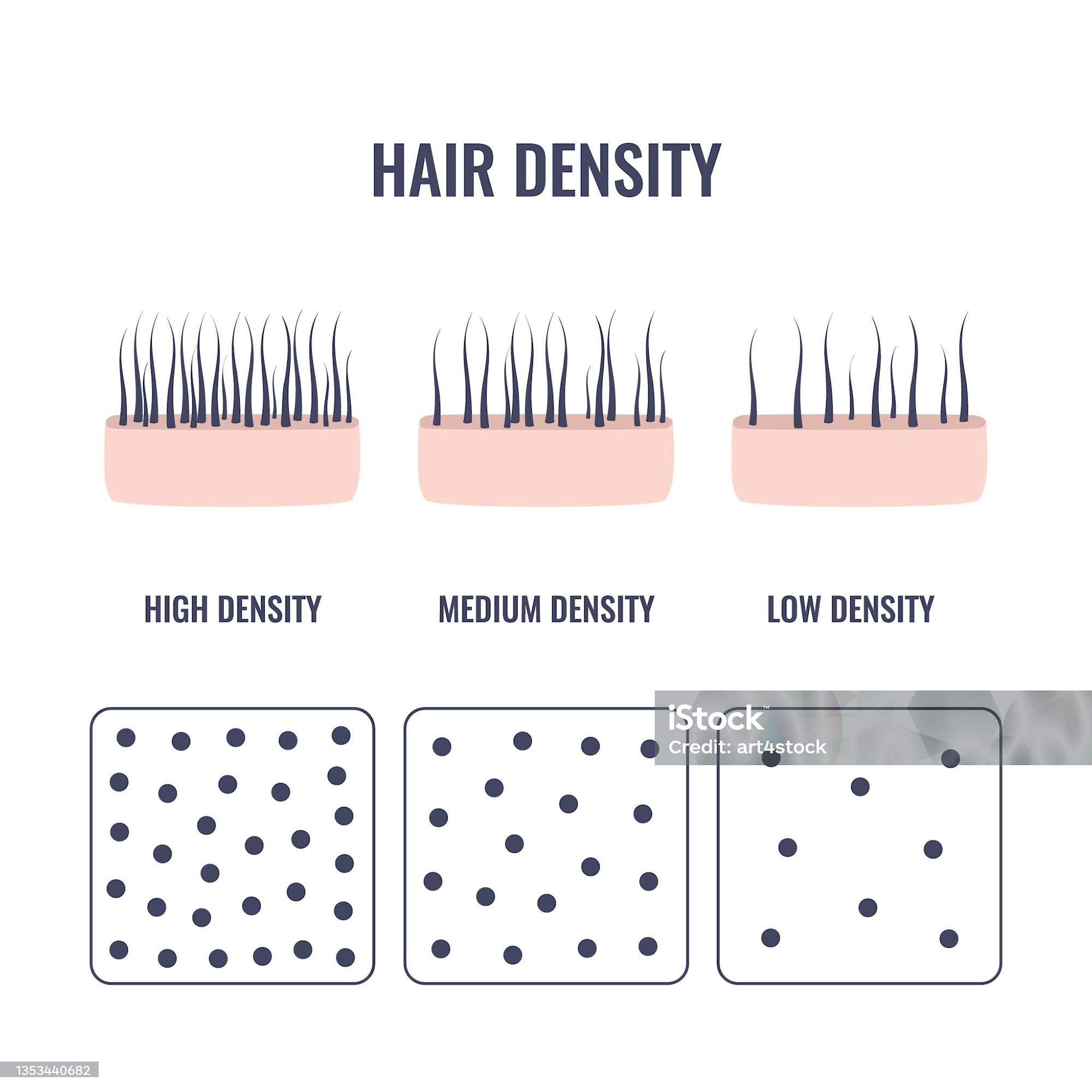
Hair density is measured by how many follicular units (or hair grafts) you have in a specific area of the scalp. These follicular units are the foundation of natural hair growth.
- High density = fuller, thicker-looking hair
- Low density = thinner, more sparse appearance
Hair density plays a big role in planning a hair transplant, as it affects how much coverage we can achieve and how natural the results will look.
What Is a Follicular Unit?
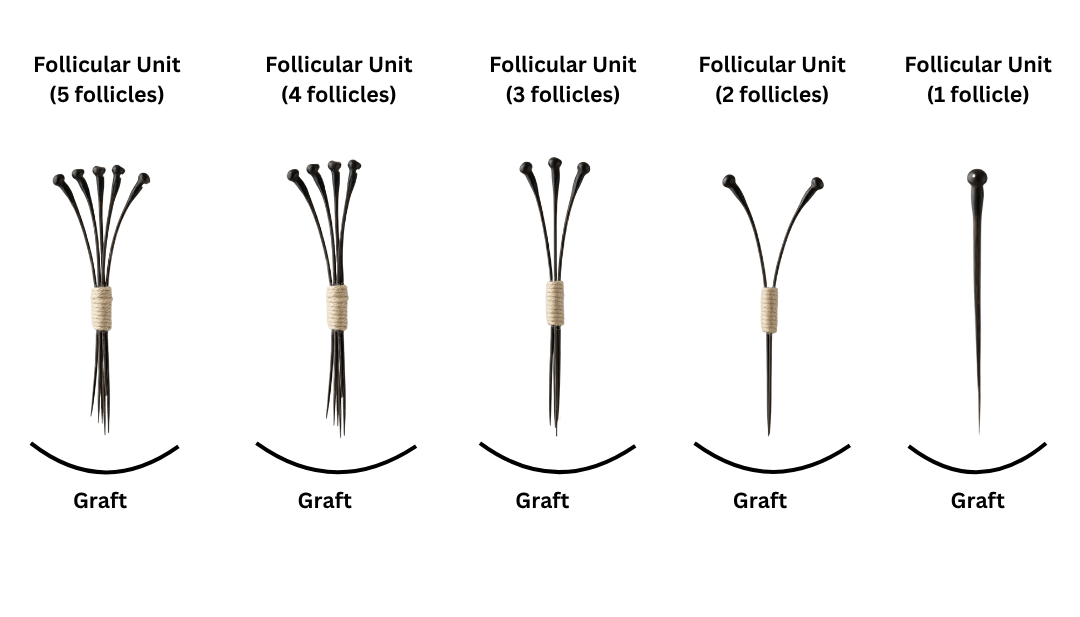
A follicular unit, also known as a hair graft, is a natural grouping of 1 to 4 hairs. But it’s more than just hair—it’s a mini-organ made up of:
- Hair shafts (1 to 4 strands per unit)
- Sebaceous glands (keep the scalp lubricated)
- Arrector pili muscle (the tiny muscle that makes your hair “stand up”)
- Nerves and blood vessels
- A protective collagen sheath
These units are what we extract and transplant during hair restoration surgery. Because we work with your hair’s natural groupings, the results look seamless and undetectable.
Types of Follicular Units
Different types of grafts are used for different areas of the scalp:
- 1-hair units – Ideal for delicate areas like the hairline
- 2-hair units – Most common; provide solid, even coverage
- 3–4-hair units – Great for boosting volume and density in larger areas
Using a strategic mix of these grafts helps recreate a natural-looking pattern that mimics how your hair naturally grows.
How Spacing Affects Density
On average, the spacing between follicular units ranges from 1.0 mm to 1.4 mm. This spacing is pretty similar in both men and women under healthy conditions. However, genetics, scalp health, and age can impact this spacing over time.
- In men with male pattern hair loss, follicular units become more spaced out as hair thins and falls out
- In women, hair thinning tends to be more diffuse—meaning the spacing may look similar, but overall density decreases
Why This Matters for Your Hair Transplant
When we evaluate your scalp, we look closely at your natural density and follicular unit patterns. This helps us design a treatment plan that ensures:
- The most natural-looking hairline
- Proper volume and density
- A result that blends with your existing hair
By working with your hair’s natural architecture, we can achieve long-lasting, beautiful results that don’t look “surgical.”
What Is Average Hair Density?
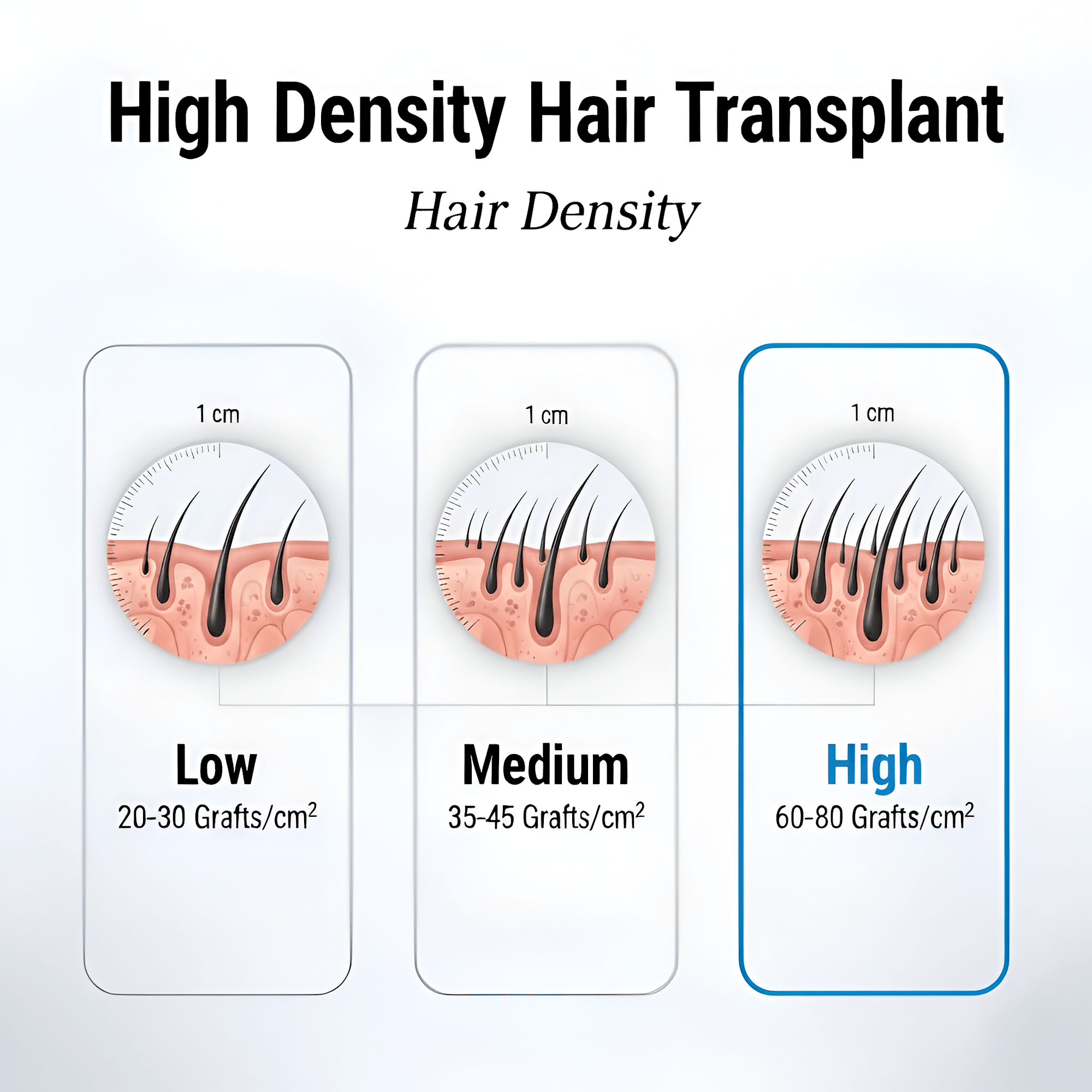
Hair density is a major factor in how full your hair looks—and it’s something we always consider when planning a hair transplant. Simply put, hair density refers to how many follicular units (hair grafts) you have per square centimeter of scalp—not the number of individual hairs.
Most people have between 80 and 120 follicular units per cm², but several factors can affect this number, including ethnicity, age, and genetics.
How Ethnicity Affects Hair Density and Thickness
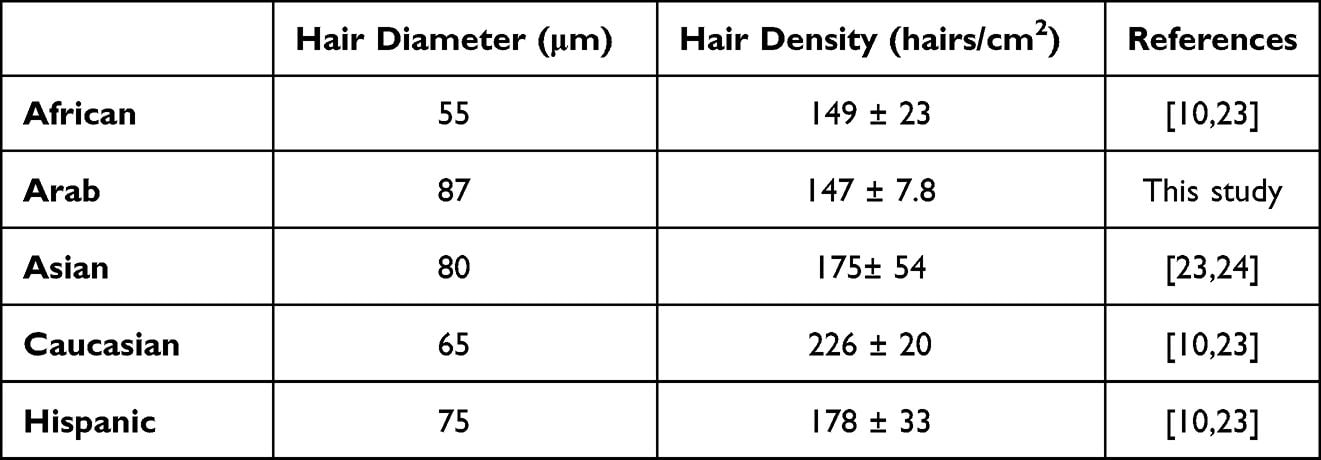
Different ethnic groups naturally have variations in both hair density (how many grafts per square cm) and diameter (how thick each strand is). Here’s how it typically breaks down:
- Caucasians. Tend to have the highest hair density of all ethnic groups. This means more follicular units per cm², often resulting in thicker-looking hair overall
- Hispanics. Usually have thicker hair strands than Caucasians. Their hair is often dark, wavy, and dense enough to provide excellent scalp coverage
- Asians. Have thick individual strands, but more single-hair follicular units, which lowers overall density. Despite this, their thicker strands often make the hair look fuller
- African Americans. Generally have lower hair density, but this is balanced by their curly or coiled hair texture, which gives the appearance of fullness. Also, the lower contrast between hair and skin tone helps mask thinning
- Individuals of Arab descent. Often have very thick hair strands but lower density, similar to African Americans
How Aging Impacts Hair Density
As we get older, it’s natural for both hair density and strand thickness to decline. This happens gradually and varies from person to person, but it’s one of the reasons many people notice thinning or less volume with age—even if they aren’t going bald.
Density Varies by Scalp Region
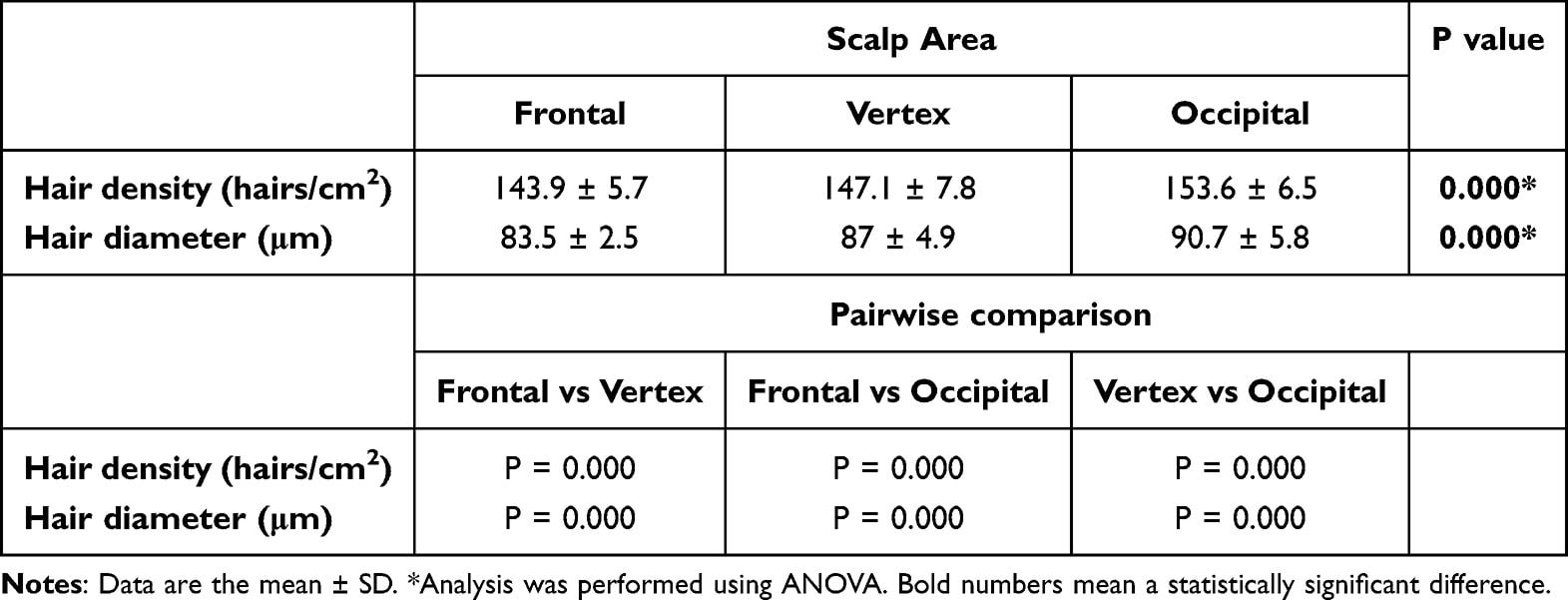
Hair density also isn’t the same across your entire scalp. Some areas naturally grow more densely packed hair than others:
- Occipital area (back of the head): Highest density. This is typically where we harvest donor hair for transplants
- Temporal areas (sides of the head): Usually the lowest density
- Crown (back top of the head): Often thicker than the front, especially in younger patients
- Frontal hairline: Tends to be more delicate and less dense
How Many Hairs Are in a Follicular Unit?
Each follicular unit (or graft) typically contains 1 to 4 hairs. Most people average about 1.8 to 2.3 hairs per graft, depending on ethnicity.
Knowing this is critical in planning a natural-looking transplant. For example:
- Single-hair grafts are used for building soft, natural hairlines
- Multi-hair grafts are ideal for creating density behind the hairline and throughout the scalp
Hair density is personal. Your age, ethnicity, hair texture, and where you’re thinning all play a role in how your hair looks—and how we design your restoration plan. A personalized approach ensures results that look natural and fit your unique hair characteristics.
How Spacing Affects Density
On average, the spacing between follicular units ranges from 1.0 mm to 1.4 mm. This spacing is pretty similar in both men and women under healthy conditions. However, genetics, scalp health, and age can impact this spacing over time.
- In men with male pattern hair loss, follicular units become more spaced out as hair thins and falls out
- In women, hair thinning tends to be more diffuse—meaning the spacing may look similar, but overall density decreases
Why This Matters for Your Hair Transplant
When we evaluate your scalp, we look closely at your natural density and follicular unit patterns. This helps us design a treatment plan that ensures:
- The most natural-looking hairline and other areas
- Proper volume and density
- A result that blends with your existing hair
By working with your hair’s natural architecture, we can achieve long-lasting, beautiful results that don’t look “surgical.”