
What Is Alopecia?
The word alopecia comes from the Greek word alopex, meaning “fox” – a reference to patchy fur loss observed in mange-infected animals. Over time, it became a medical term used to describe hair loss from any part of the body where hair normally grows.
Alopecia doesn’t describe a specific cause – it’s a general term for hair loss that can range in severity, pattern, and origin. In fact, there are 57 types of alopecia, each with different underlying causes and treatment needs.
Think of hair loss like a cough – it’s a symptom, not a diagnosis. Just as a cough can come from allergies, a cold, or acid reflux, hair loss needs further evaluation to understand what’s really going on beneath the surface.
The Hair Growth Cycle
The scalp contains about 100,000 hair follicles, each cycling through three key stages:
- Anagen (Growth Phase): Lasts 2–6 years. Hair actively grows
- Catagen (Transition Phase): Lasts 10 days. Hair stops growing and detaches
- Telogen (Resting/Shedding Phase): Lasts around 3 months. Hair shafts fall out, and new ones begins growing
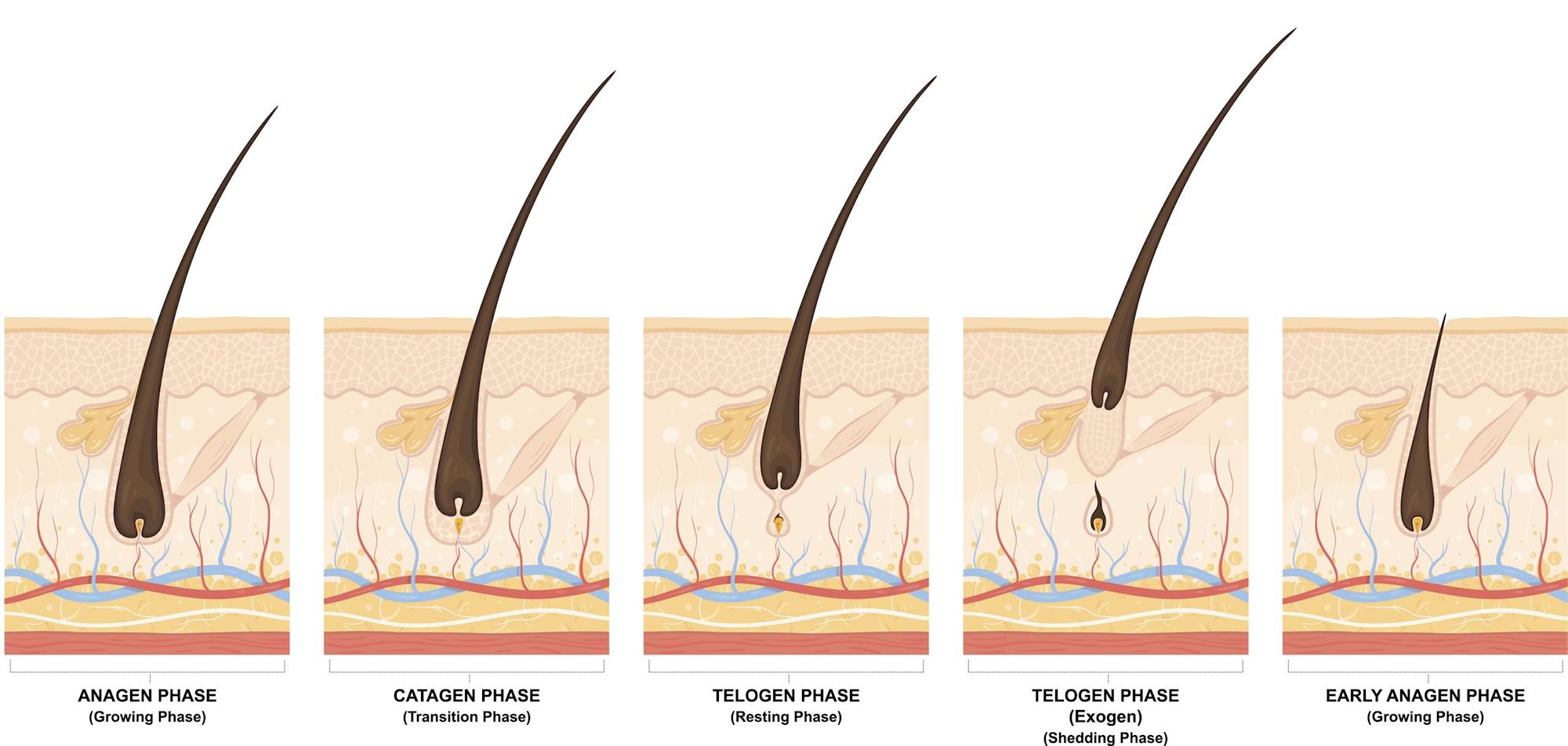
Due to this natural cycle, shedding 10% or 50–100 hairs per day is normal. Seeing hair in your brush or shower drain doesn’t always mean something is wrong.
But when this cycle is disrupted—hair may fall out faster than it’s replaced. That’s when we begin to see signs such as thinning, receding hairlines, or bald areas.