
Chemotherapy-Related Hair Loss
Anagen effluvium is sudden, rapid hair loss that occurs during the growth phase of the hair cycle—most commonly seen in cancer patients undergoing chemotherapy. Studies show that 65% of patients undergoing chemotherapy will develop anagen effluvium.1
Unlike telogen effluvium, anagen effluvium starts within 1–2 weeks of treatment and often causes complete hair loss, including scalp, eyebrows, eyelashes, and body hair.
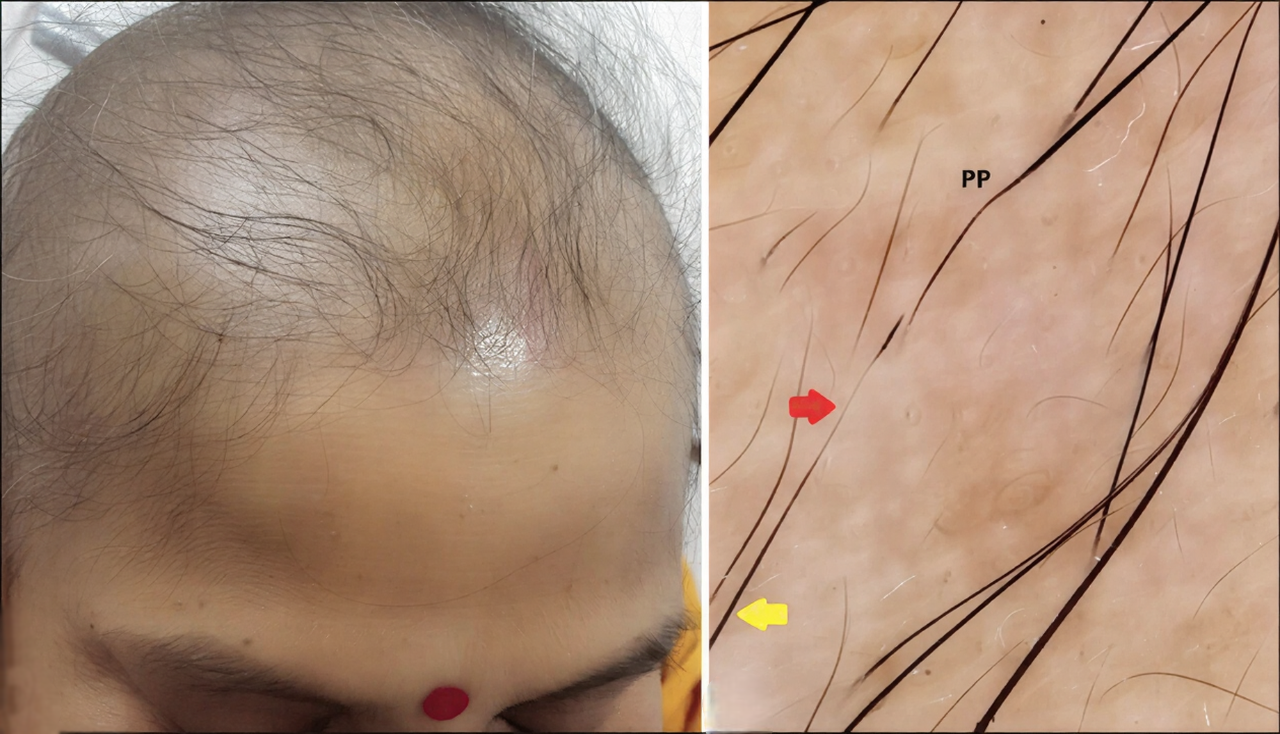
Trichoscopy shows yellow dots, black dots, broken hairs, tapered hairs, and Pohl-Pinkus constrictions reflecting fragile anagen shafts damaged by toxins or chemotherapy.
Most Common Chemotherapy Drugs
- Taxanes (e.g., paclitaxel, docetaxel)
- Anthracyclines (e.g., doxorubicin, daunorubicin, epirubicin)
- Alkylating agents (e.g., cyclophosphamide, ifosfamide, busulfan, chlorambucil, melphalan)
- Antimetabolites (e.g., methotrexate, cytarabine, 5-fluorouracil, gemcitabine)
- Platinum-based drugs (e.g., cisplatin, oxaliplatin, carboplatin)
What to Expect
- Hair usually starts regrowing 3–6 months after treatment ends
- Regrown hair may be finer, curlier, or a different color
- Some may experience permanent thinning, depending on the drug type and duration
Supportive Options
- Scalp cooling caps to protect follicles 2, 3
- Minoxidil to shorten the duration of hair loss 4
- Wigs, hats, and counseling to manage the emotional impact
The Emotional Impact of Hair Loss During Chemotherapy
For many women, hair loss isn’t just a side effect of chemotherapy—it’s one of the most emotionally devastating parts of treatment. In fact, studies show that up to 50% of women describe losing their hair as the hardest part of their cancer journey.
The fear of hair loss is so powerful that an estimated 8% of patients choose to decline potentially lifesaving chemotherapy simply because they cannot bear the thought of going bald.5
Hair represents identity, confidence, and a sense of normalcy. When it falls out, patients often feel like their illness becomes visible to the world—something they can no longer keep private.
Understanding the emotional toll of hair loss is essential in supporting patients. Addressing this fear early can help patients focus on their health, remain confident in public, and feel more in control during treatment.