
Hair Loss from Tension and Tight Hairstyles
What Is It?
Traction alopecia is caused by repeated pulling or tension on hair over time. It’s most common with:
- Tight ponytails or buns
- Braids, dreadlocks, cornrows, twists
- Hair extensions or weaves
This hair loss conditions affects 31.7% of African American women due to styling practices 1
Where It Shows Up
- Hairline and temples
- Back of the scalp (from buns/chignons)
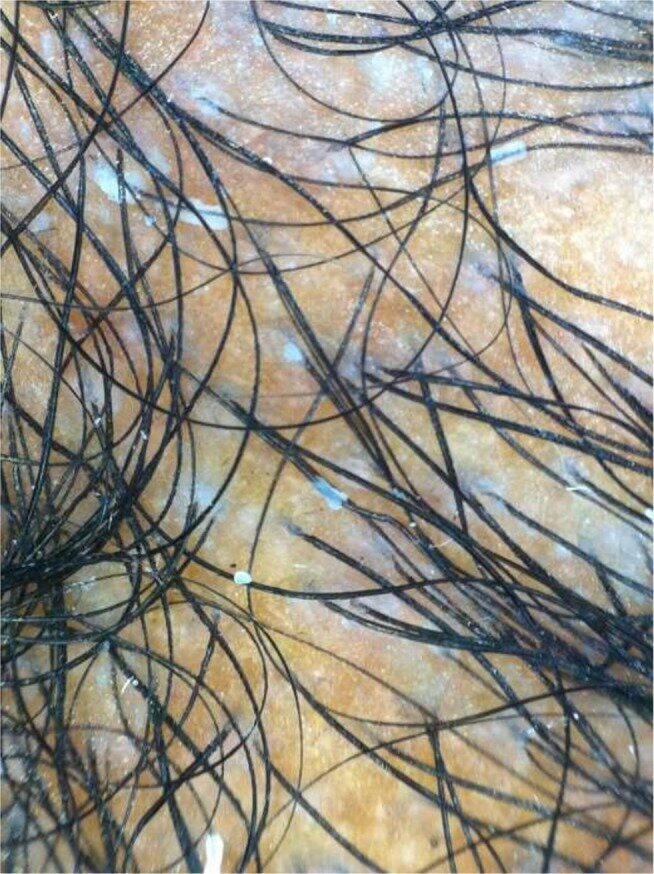
Trichoscopy of traction alopecia demonstrates cylindrical hair casts along several hair shafts.
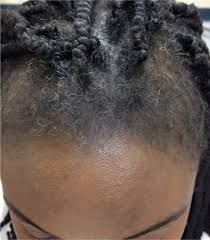
Ma, C., Wang, L., & Yang, M. (2018). Clinical and trichoscopic evaluation of alopecia areata patients treated with intralesional corticosteroids. Clinical, Cosmetic and Investigational Dermatology, 11, 1–7. https://doi.org/10.2147/CCID.S137296
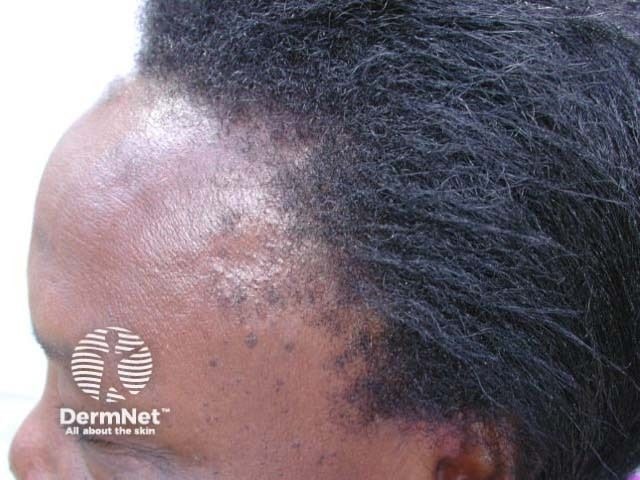
DermNet
Can It Be Reversed?
If the tension-causing hairstyle is stopped early, hair regrowth is possible. However, if left untreated, traction alopecia can progress to scarring alopecia, resulting in permanent hair loss due to damage to the hair follicles.
Early intervention and education on healthy hairstyling practices, such as opting for looser hairstyles and avoiding excessive tension, are critical to preventing late-stage disease.
Treatments
- Stop tension-causing styles
- Topical minoxidil – Promotes regrowth
- PRP therapy – Can help thicken weakened hair
- Hair transplant – Only if no scarring is present, and other hair loss conditions have been ruled out