
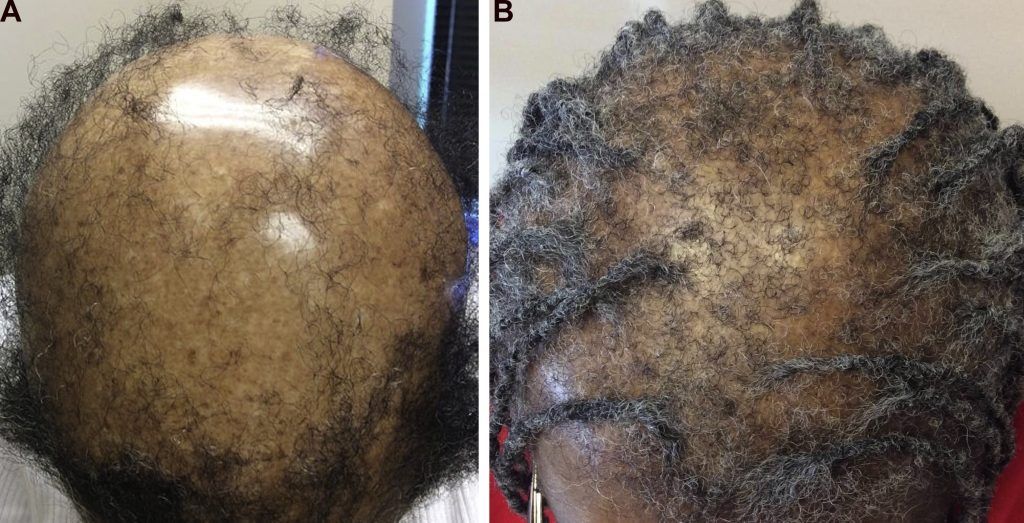
Most common in African American women, CCCA begins at the crown and spreads outward. Early signs include hair breakage, tenderness, or burning. Tight hairstyles, chemical relaxers, and excessive heat may contribute, but genetics and inflammation are key players.
Typically, the hair loss starts at the crown of the scalp and progresses outward in a circular pattern, causing permanent hair loss if untreated. CCCA can also present as irregular patchy hair loss involving the temples and/or back of the scalp. Scalp symptoms may include itching, tenderness, or burning, while others have no symptoms.
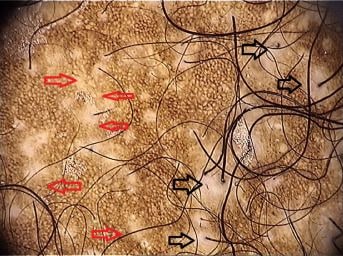
Trichoscopy presents with peripilar white and gray halos, loss of follicular openings, perifollicular scaling, and fibrotic white patches radiating outward from the crown (vertex).
Treatment Options
Consulting a dermatologist early in the disease course is vital to achieving the best possible outcome. Treatment focuses on halting the progression of hair loss and reducing inflammation.
- Topical/injected steroids
- Anti-inflammatory antibiotics (doxycycline)
- Minoxidil to support hair preservation
- Avoid tight styles, heat, and chemicals
- Hair transplant is not advised unless stable for 2+ years and often requires a repeat scalp biopsy to ensure the disease is inactive. Transplants into inflamed areas tend to fail or worsen the disease
Prognosis
The prognosis for CCCA depends on early diagnosis and treatment. While hair regrowth in scarred areas is not possible, progression can often be stopped or slowed with proper care.
Patients are encouraged to avoid tight hairstyles, excessive heat, and harsh chemical treatments to prevent further damage to their scalps. Appropriate medical management enables many patients to maintain their hair and alleviate symptoms such as scalp discomfort.