
Painful Nodules, Drainage, and Scarring
Dissecting Cellulitis (DCS) is a chronic, scarring scalp disease primarily affecting young men, especially African Americans. It causes painful, inflammatory nodules, pus drainage, and foul odor, eventually leaving behind scarred bald patches.
It shares links with hidradenitis suppurativa and acne conglobata, all part of the “follicular occlusion” disorders.
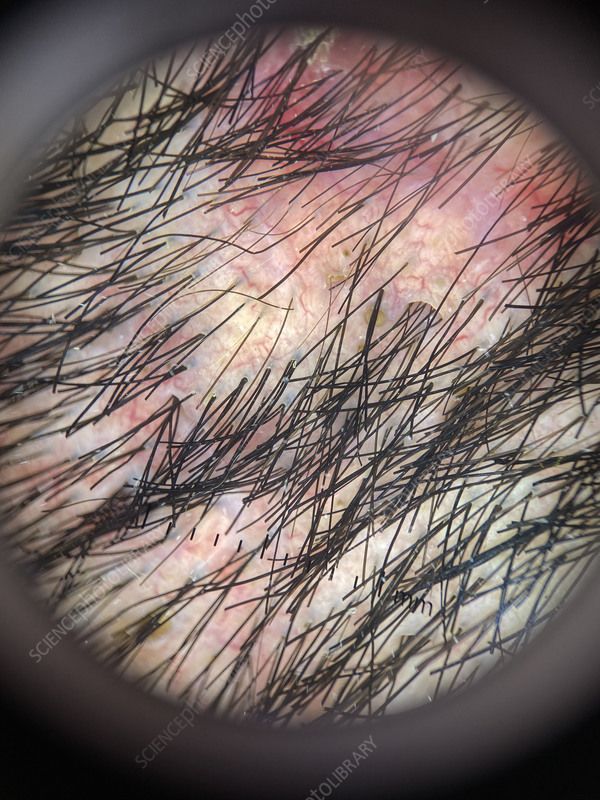
Trichoscopy shows large yellow structureless areas, multiple pustules, interconnecting sinus tracts, and emerging tufted hairs.
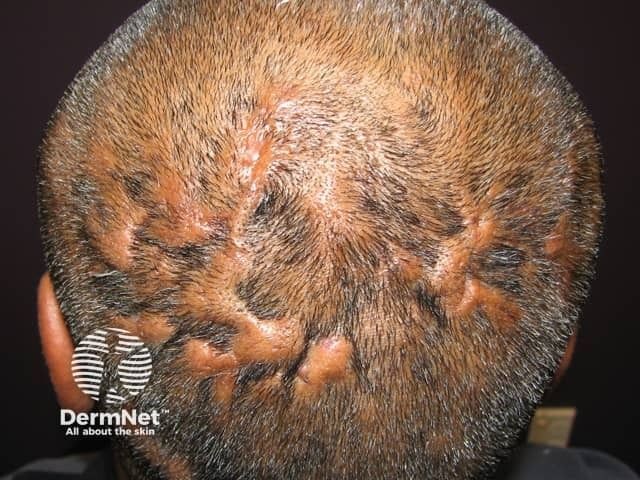
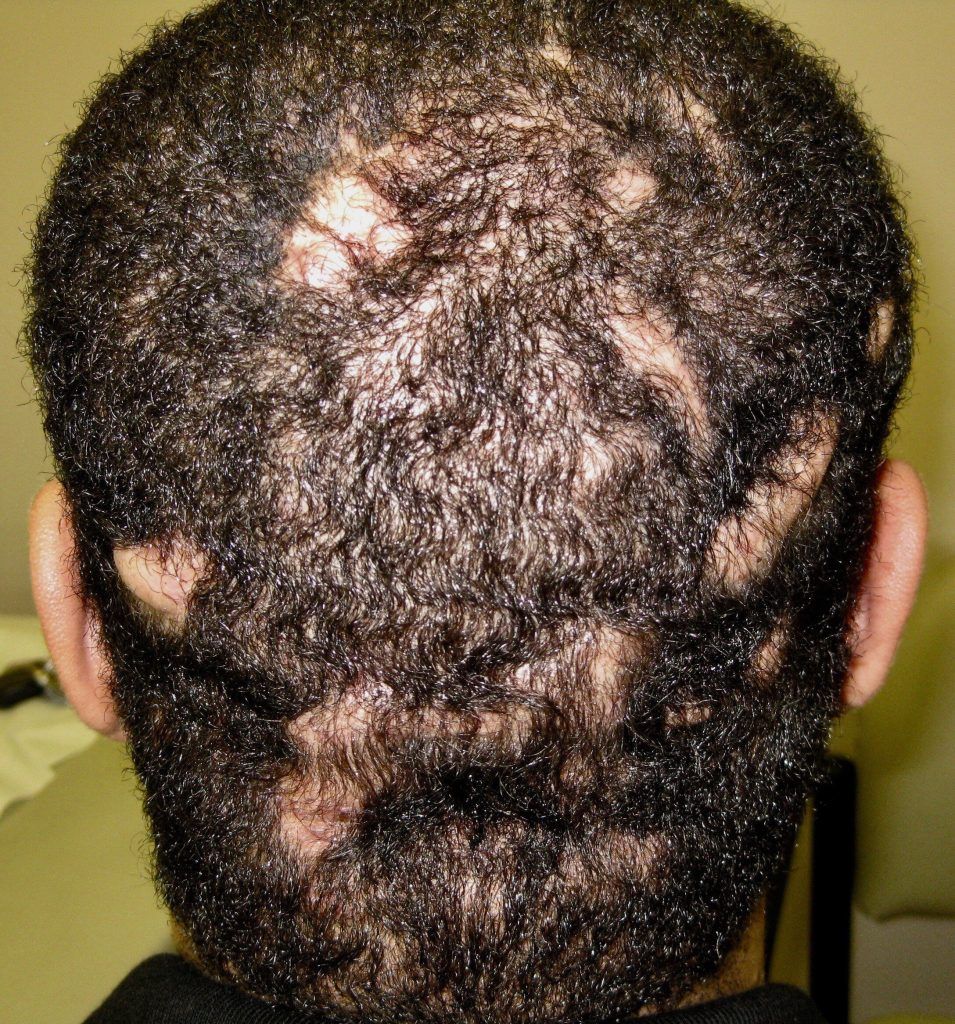
Diagnosis
Diagnosis is based on the appearance of the scalp, patient history, and sometimes a scalp biopsy to confirm inflammation and scarring around the hair follicles. Cultures may also be taken from the draining pus to rule out bacterial infections.
Treatment Options
Early treatment via a dermatologist focuses on controlling inflammation, preventing new lesions, and minimizing hair loss.
- Oral antibiotics, such as doxycycline or clindamycin
- Isotretinoin or biologics in severe cases
- Corticosteroid injections to calm nodules
- Topical minoxidil to support existing hair
- Hair transplant surgery is not advised due to the high risk of transplant failure and disease flare-up
Prognosis
The prognosis for DCS depends on early diagnosis and effective treatment. While hair regrowth in scarred areas is not possible, controlling the condition can prevent further hair loss and reduce symptoms such as pain and drainage.
Long-term follow-up with a dermatologist is essential to monitor for flare-ups and adjust treatment as needed. With proper care, many patients can achieve stabilization and improved scalp health.