
Folliculitis decalvans is a rare, inflammatory scalp condition that leads to scarring and permanent hair loss. It often starts at the crown and presents with:
- Redness, yellow crusting, and scaling
- Follicular tufting (multiple hairs from one follicle)
- Short, broken hairs indicating damage
- Smooth, shiny bald patches from scarring
The inflammation is thought to result from an abnormal immune response, often triggered by Staphylococcus aureus infection.
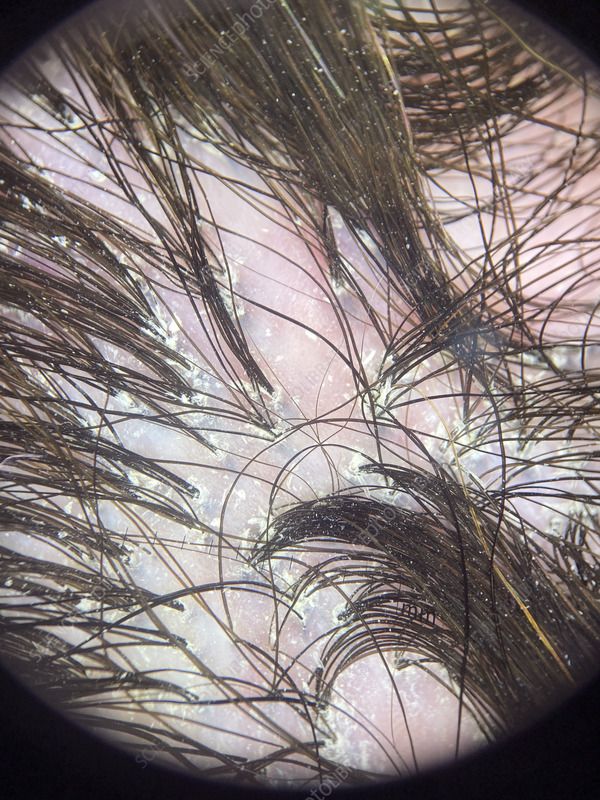
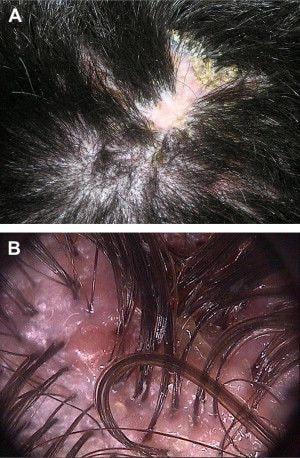
Trichoscopy is characterized by tufted hairs (multiple hairs from one follicle), perifollicular erythema, pustules, and yellow crusts.
Diagnosis
Diagnosis is based on the patient’s medical history, clinical examination, and a scalp biopsy, if needed, which reveals characteristic signs of inflammation and hair follicle destruction. Bacterial cultures may also be done to identify any contributing infections, such as Staphylococcus aureus.
Treatment Options
When managing this condition, treatment strategies vary depending on disease activity and severity. The following options are commonly considered, ranging from medications that reduce inflammation and bacterial load to measures aimed at preserving existing hair.
- Oral and topical antibiotics (e.g., doxycycline, clindamycin) reduce bacterial load
- Steroid injections calm active inflammation
- Immunosuppressants (e.g., hydroxychloroquine or isotretinoin) are used in severe cases
- Minoxidil may help maintain hair in unaffected areas
- A hair transplant is not recommended unless the condition has been inactive for several years. Transplants into inflamed areas tend to fail or worsen the disease
Prognosis
The prognosis for FD depends on early diagnosis and effective treatment. While the condition cannot be cured, it can often be managed to prevent further hair loss and reduce symptoms such as redness and itching.
Regular follow-ups with a dermatologist are necessary to monitor the condition and adjust treatment as needed. With proper care, patients can achieve stabilization and improved scalp health, though regrowth in scarred areas is not possible.