
Your Personalized Consultation
Before any hair transplant, it all starts with a thorough consultation. This isn’t just a formality—it’s where the planning begins.
Here’s what to expect:
- Hair loss review: We’ll take a close look at how your hair loss has progressed over time—when it started, how it’s changed, and the pattern it’s following
- Medical review: We’ll go over your health history and blood work to spot any factors that could affect your results
- Scalp evaluation: We’ll assess your hair loss pattern and the quality of your donor hair (usually the back and sides of your scalp)
- Candidacy check: Not everyone is an ideal candidate. We’ll determine if you’re a good fit and estimate how many grafts you’ll likely need
- Education: You’ll learn about the root causes of your hair loss review treatments like finasteride or minoxidil which help slow or stop future hair loss
- Surgical options: We’ll walk you through both FUT and SmartGraft™ FUE techniques, so you can understand the benefits of each
- Set expectations: This is key. We want you to know exactly what kind of results are possible, so there are no surprises
Think of your consultation as the blueprint—it’s how we tailor the procedure to you.
Donor Area Preparation: Where Your New Hair Begins
Every successful hair transplant starts with strong roots—literally. That’s why the donor area is so important.
What Is the Donor Area?
The donor area is where we harvest healthy hair follicles for transplanting—typically the back and sides of your scalp. These hairs are genetically resistant to DHT, the hormone responsible for most hair loss, which means they’re built to last even after being moved to a new area.
Once transplanted to balding areas, these hairs continue to grow for life. Think of them as your most reliable, long-term hair.
Comfort First: Local Anesthesia & Relaxation Options
We make sure you’re comfortable throughout the procedure:
- Local anesthesia is used to numb both the donor and recipient areas. This type of anesthesia is similar to getting numbed at the dentist
- We also offer oral sedatives and nitrous oxide (laughing gas) to help you relax
- Most patients watch TV, listen to music, or even nap while we work
Once the area is numb and you’re comfortable, we begin carefully removing grafts—whether using the strip method (FUT) or the SmartGraft™ FUE device, depending on your plan.
Donor Hair Removal: Planning with the Future in Mind
Removing donor hair isn’t just about today’s results—it’s about protecting tomorrow’s options too.
Why Donor Hair Planning Matters
- Survival rate: Proper planning ensures healthy, viable grafts
- Avoiding overharvesting: Taking too many follicles can lead to visible thinning in the donor area
- Natural appearance: Preserving density in the back and sides keeps your results looking natural from every angle
- Future flexibility: Smart donor management leaves you with enough reserve for future procedures if needed
This is why we take a conservative and strategic approach—so your results last and look great over time
FUT vs. SmartGraft™ FUE: The Key Differences
Both techniques work well. The best method depends on your goals, hair type, and how you wear your hair. Here’s how they differ:
| Feature | FUT (Strip Method) | SmartGraft™ FUE |
| Hair Length Before Surgery | Can leave more hair in the donor area | Area must be shaved short for access |
| How Grafts Are Removed | A thin strip of scalp is taken and dissected | Individual follicles are removed one-by-one |
| Scarring | Linear scar (usually hidden under existing hair) | Tiny dot scars scattered across donor area |
| Concealability | Easier to conceal with medium-to-long hairstyles | Better suited for shorter hairstyles |
Important note: No hair transplant is truly scarless. Be wary of any clinic that says otherwise. Scars from a well-done procedure are usually small and easy to hide, but they’re always present to some degree.
Follicular Unit Transplantation (FUT): Strip Method
FUT is a proven, effective method for restoring hair, especially when a large number of grafts are needed in one session. It’s sometimes called the “strip method” because it involves removing a thin strip of hair-bearing skin from the back and sides of the scalp.
How It Works
- A narrow strip of scalp—typically just 1–2 cm wide—is shaved down to about 2mm in length
- The strip is then carefully removed using a scalpel
- The area is closed with stitches, leaving a thin, linear scar that typically heals very well
- Hair above the stitches easily covers the area, so you can go out in public without feeling self-conscious
- Stitches are removed 10 to 14 days later, often with minimal discomfort
Once healed, the scar is:
- Permanent but very thin (usually 1–2mm wide)
- Easily hidden with just half an inch of hair length (roughly a #4 guard on clippers)
Strip Size Depends on You
The number of grafts we can extract in a single FUT session depends on a few key factors:
- Donor hair density: More follicles per square centimeter = more grafts
- Size of your scalp: A larger head means a longer donor area
- Scalp laxity: Looser scalp tissue allows for a wider strip to be removed safely
For example:
Someone with a small head, lower density, and tight scalp may only yield a modest strip with fewer grafts.
In contrast, someone with a larger head, dense donor area, and good laxity can often support a wider strip—resulting in more grafts without excessive tension on the skin.
That’s why your consultation is so important. We assess all of these factors to create a surgical plan tailored to you—maximizing coverage while preserving the natural appearance and health of your donor area.
FUT Donor Area Scar
Follicular Unit Excision (FUE): A Modern, Precise Approach to Hair Transplantation
FUE is one of the most advanced and minimally invasive methods for hair restoration. It allows us to extract individual hair follicles without using a scalpel or stitches—ideal for patients who prefer to wear shorter hairstyles and want a quicker recovery.
How FUE Works
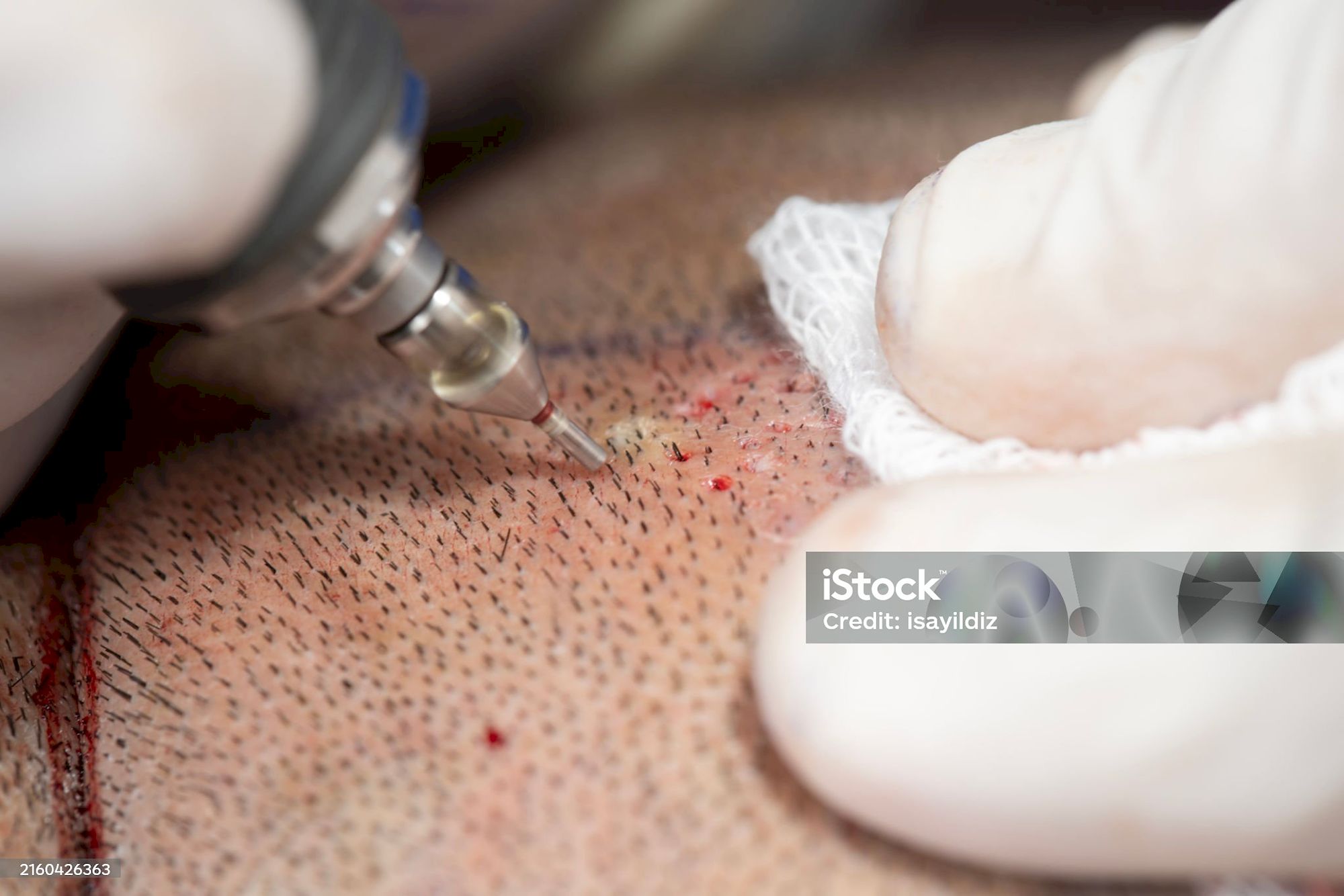
- The donor area (typically the back and sides of the scalp) is shaved to about 2mm to clearly see the direction and angle of your hair growth
- Using a precise handheld tool, we create tiny circular incisions (0.7–1.0 mm) around individual follicular units
- Each hair follicle is gently loosened and extracted using controlled suction, one at a time
- This process is done strategically and randomly to avoid creating noticeable thinning or “patchy” spots in the donor area
What Makes FUE So Precise?
Hair follicles are not all the same. During extraction, we consider:
- The natural curve of the hair
- The exit angle from the skin
- How hair follicles are grouped beneath the surface
- Your skin thickness and scalp elasticity
These variables require surgical precision. Our goal is to remove each graft intact—maximizing survival and ensuring natural-looking results.
Healing and Scarring
- The small extraction sites heal within a few days—no stitches required
- Scarring is minimal: each site leaves behind a tiny round scar (<1mm) that’s hidden by the surrounding hair
- You can wear your hair as short as 1/8 inch (a #1 guard using clippers) and the scars remain virtually undetectable
Donor Area Management
With FUE, we can harvest about 15–20% of grafts from the donor zone per session without compromising appearance. However, to maintain a natural look:
- We space extractions to avoid leaving visible gaps
- The remaining hair helps camouflage the micro-scars and preserve density
In contrast, FUT focuses on a narrow strip of the donor area, where all follicles in the strip can be harvested at once—without affecting the density of hair outside that strip.
Choosing Between FUE and FUT
Both methods are highly effective and can deliver excellent results. The best choice depends on your:
- Hairstyle preferences
- Donor hair characteristics
- Required hair graft count
- Long-term goals
We’ll help you decide which approach fits your needs during your consultation.
SmartGraft™ FUE Technology: Precision Meets Innovation
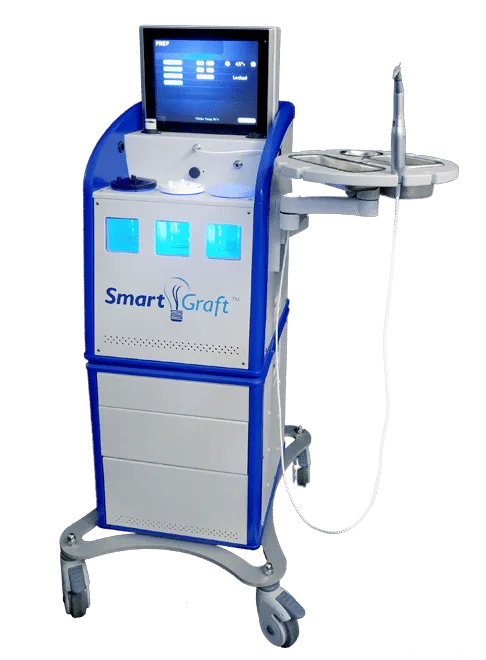
Dr. Yaker was the first surgeon in Texas to offer SmartGraft™ starting in 2015—an advanced, automated FUE (Follicular Unit Excision) system that’s transformed the way modern hair transplants are done. Recognized as Best in Class by the Global Hair Loss Association (GHLS), SmartGraft™ brings a new level of precision, safety, and graft preservation to the FUE procedure.
How SmartGraft™ Works
SmartGraft™ uses a small, automated punch device combined with gentle suction to extract individual hair follicles from the donor area.
Here’s what makes it different:
- Tiny circular punch makes a shallow incision around each follicle
- Suction gently pulls the graft into a closed, sterile chamber
- Follicles are stored in a temperature-controlled, saline-filled container, keeping them hydrated and protected until they’re implanted
This closed-loop system maintains optimal graft health from the moment they’re removed—maximizing survival and ensuring high-quality results.
Benefits of SmartGraft™ FUE
Shallower Scoring = Less Trauma
The suction-assisted punch minimizes scoring depth, lowering the risk of damaging or burying follicles during extraction.
“Drag” Technique for Safer Extractions
Rather than pulling with forceps, SmartGraft™ uses a gentle drag motion to remove each hair graft. This lets the us immediately inspect the angle and quality of each graft, making real-time adjustments if needed.
Superior Visualization of the Donor Area
Because hair grafts are removed instantly, the extraction pattern can be clearly seen without obstruction. This helps:
- Avoid overharvesting
- Maintain even spacing
- Preserve density and natural appearance in the donor zone
In contrast, other systems often leave grafts sitting in the scalp until they’re pulled manually, which can obscure the field and affect precision.
Better Graft Hydration and Survival
Once extracted, each hair follicle travels through a closed tubing system into a hydrated, chilled chamber. This environment:
- Prevents drying out (desiccation)
- Protects the grafts until implantation
- Helps support healthier, long-lasting results
Why SmartGraft™ Matters
Hair follicles are delicate. Even the smallest amount of trauma or dehydration can affect whether they survive—and how well they grow.
SmartGraft™ helps ensure:
- Gentler handling
- Cleaner, more precise extractions
- Higher graft survival rates
- A smoother experience for the patient
SmartGraft™ is one of the reasons Dr. Yaker’s FUE results stand out. If you’re considering hair restoration and want the best technology available, SmartGraft™ may be the right option for you.
SmartGraft™ FUE Donor Area Scars


Two-weeks post-op*
Hair Follicle Inspection and Sorting
Once hair follicles are safely extracted—whether through FUT or FUE—the next step is all about preparation, precision, and artistry.
Each extracted follicular unit is carefully examined under a microscope. Here’s what happens:
- Trimmed and cleaned: To remove extra tissue and prepare each graft for placement
- Grouped by size: Grafts are separated based on the number of hairs they contain—typically 1 to 4 hairs per follicle
- Hydrated and chilled: All grafts are stored in a cool saline solution to keep them healthy until it’s time for implantation
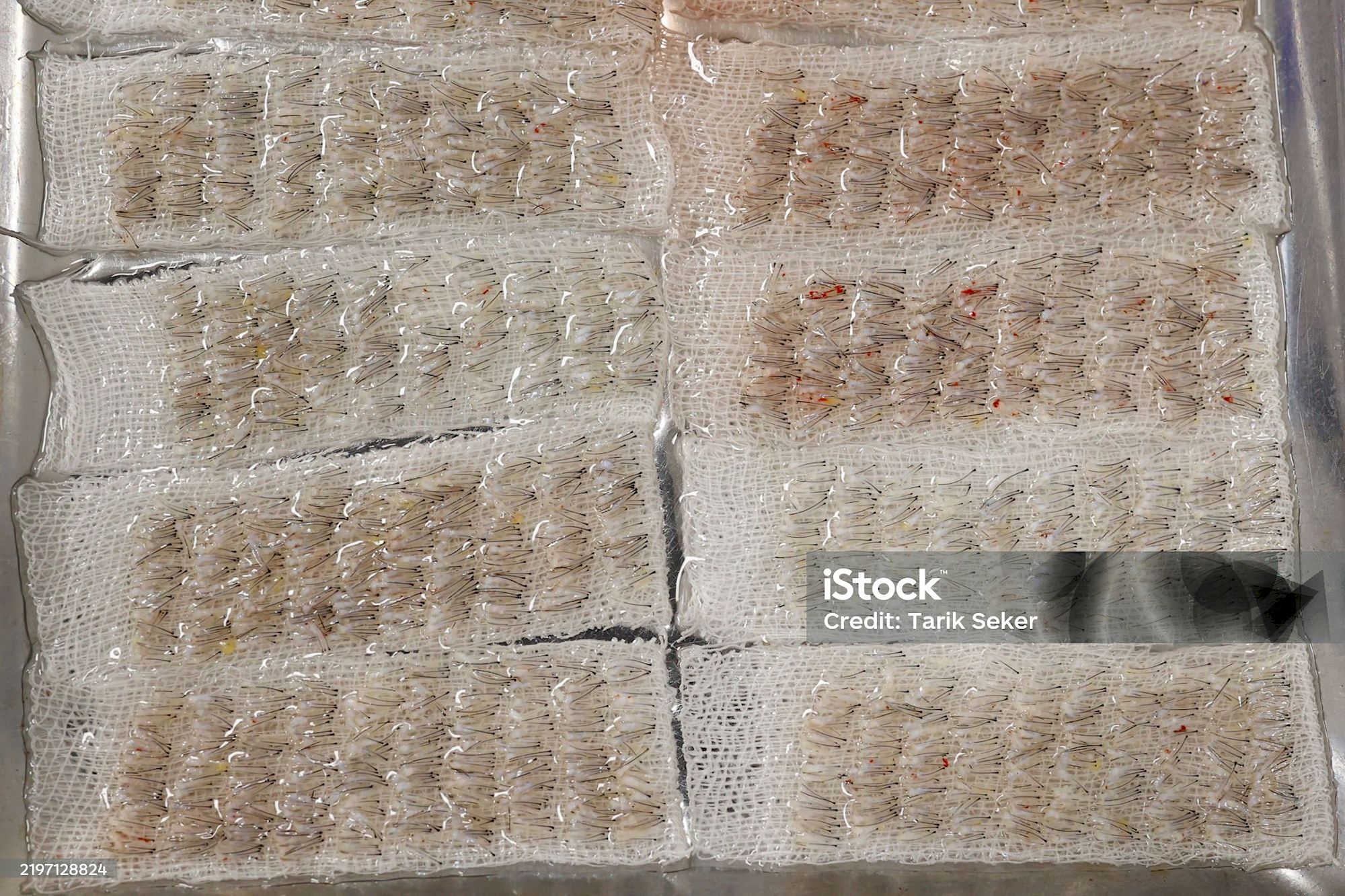
On average, each graft contains about 2.2 to 2.3 hairs, with most being two- or three-hair groupings—ideal for creating fullness and natural density.
PRP Injections: Boosting Graft Survival
Before making the recipient sites, we inject Platelet Rich Plasma (PRP) into the scalp. PRP is a concentrated blend of your own growth factors and healing proteins, drawn from a small sample of your blood.
- Why PRP? Think of it as natural fertilizer—it stimulates healing, improves blood supply, and supports graft survival and growth
- It also enhances overall scalp health, creating the best environment for your new hair to thrive
Creating the Recipient Sites: The Most Critical Step
This is where the artistry of hair transplantation comes into play.
Using ultra-fine needles or custom blades, we make tiny incisions in the recipient area—each one designed with surgical precision to match the way your natural hair grows.
What we control here:
- Angle: Mimics the natural tilt of your hair
- Direction: Follows your natural hair flow
- Depth: Matches the follicle length for proper placement
- Density: Determines how full the final result will look
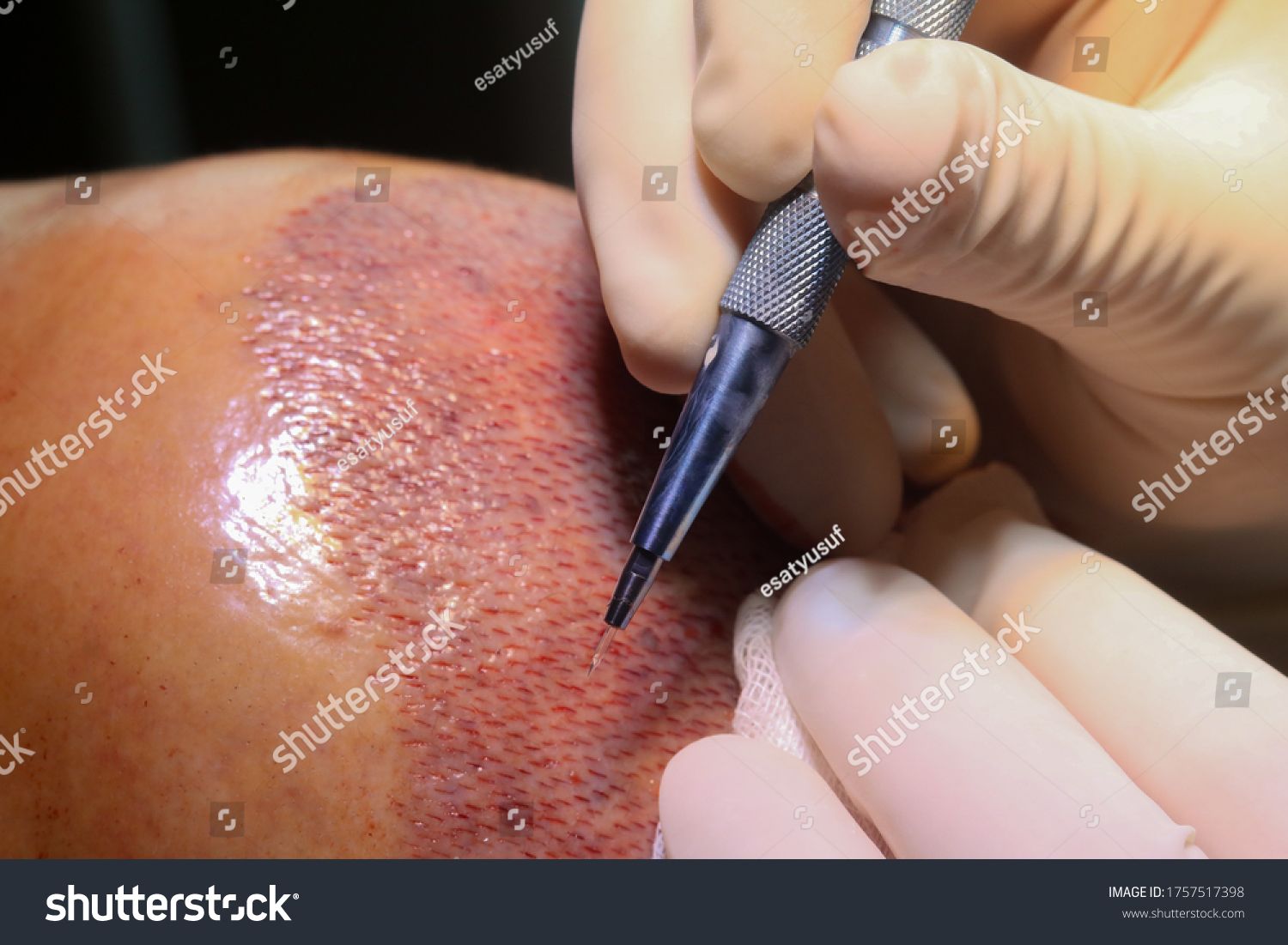
Every region of the scalp has its own growth pattern—and we recreate those details to deliver a seamless, undetectable result.
Natural Hair Angles by Region
Here’s how hair grows in different zones—and how we replicate it:
| Scalp Region | Hair Angle & Direction |
| Hairline | Grows forward and downward at 10–20° for softness. We use mostly single-hair grafts here to avoid a “pluggy” look. |
| Temples | Very shallow exit angle (5–15°) so hair lies flat. Direction is backward and slightly downward. |
| Frontal Scalp (Behind Hairline) | Slightly steeper angle, around 20–30°, with a forward direction. Helps blend into the midscalp. |
| Midscalp | Becomes more upright, angled at 30–45°, and grows slightly upward. This creates density through the center of the scalp. |
| Crown/Vertex | Most complex area. Hair grows in a spiral (whorl) with exit angles between 20–45°, depending on the location. Matching this pattern is critical to a natural-looking crown. |
Hair transplant success isn’t just about graft survival—it’s about creating a result that looks like you were born with it. This stage is where surgical skill meets design, and it’s one of the reasons Dr. Yaker’s results stand out.
Hair Graft Placement: Precision That Brings It All Together
After the recipient sites are carefully created, the final—and most delicate—step begins: placing the grafts.
This stage requires intense focus, a steady hand, and an eye for detail. Each hair follicle is positioned to mimic the natural flow and density of your existing hair.
How Grafts Are Placed
Using ultra-fine forceps, our team gently places each hair graft into the tiny incisions made during site creation. Placement is done with precision to match the natural:
- Angle
- Direction
- Spacing
- Depth
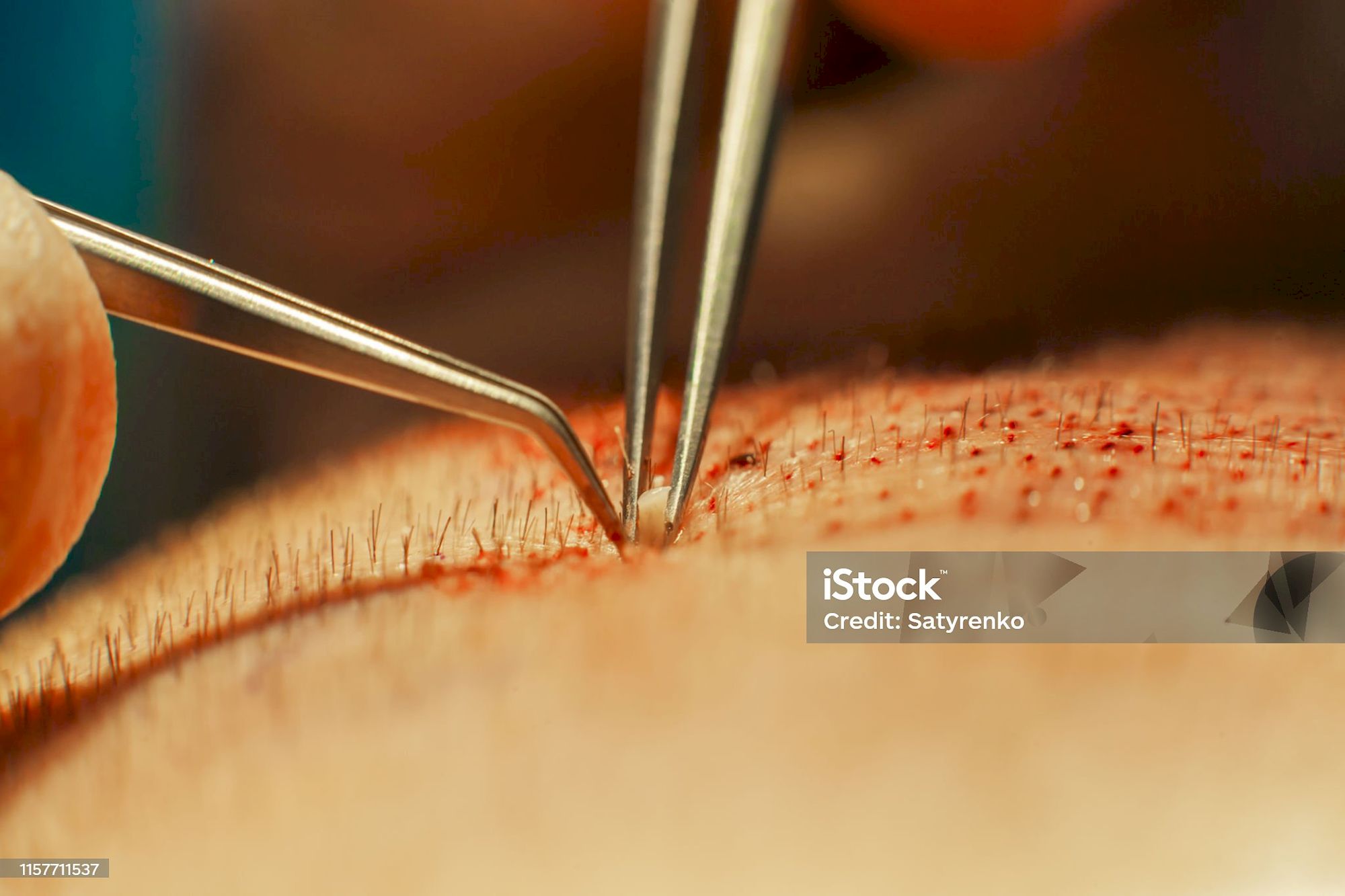
This isn’t just about putting hairs in holes—it’s about designing a result that looks completely natural.
Strategic Placement by Hair Type
Not all grafts are created equal, so we place them according to their size:
- Single-hair grafts go in the very front of the hairline. This creates a soft, feathered edge—never a harsh or unnatural look
- Two- and three-hair grafts are placed just behind to build density and volume in the frontal zone
- Larger follicular units are used further back in the midscalp and crown where more coverage is needed
This layering technique helps create the illusion of fullness while keeping the hairline soft and age-appropriate.
Why Depth Matters
Each graft must be inserted at just the right depth:
- Too deep? The graft may heal poorly or look sunken
- Too shallow? It may stick out or fall out too soon
Our goal is to seat each graft so it rests slightly above the skin’s surface, which promotes natural healing and optimal growth.
Hair graft placement is both science and art. When done correctly, your hair grows in naturally—no one can tell where your original hair ends and your transplanted hair begins.
Combination Hair Transplant Surgery (FUT + SmartGraft™ FUE)
For patients with advanced hair loss or those seeking maximum coverage in one session, combining FUT (strip method) and SmartGraft™ FUE can deliver outstanding results—while keeping recovery time to a minimum.
Why Combine FUT + FUE?
When done together— over two consecutive days—this combo approach has several major advantages:
- Maximized graft yield: By using both methods, we can safely harvest more grafts without over-thinning one specific donor area
- More coverage: More grafts mean more density and more zones covered
- Single recovery period: Doing both procedures back-to-back lets you heal once instead of going through two separate recoveries
A combination procedure offers the best of both worlds—the volume potential of FUT with the precision and flexibility of FUE. It’s an ideal solution for patients who want maximum results with just one recovery period.
What to Expect on Surgery Day
Procedure Time
- Duration: Typically 4 to 10 hours, depending on the number of grafts and complexity of your case.
Recovery and Hair Growth Timeline
Here’s what happens after your procedure:
The First 7-10 Days
- Tiny scabs form around each graft and usually fall off by day 7 to 10
- Mild swelling, redness, and itchiness are common and part of the healing process
The Shedding Phase
- Around 90% of the transplanted hair shafts will shed within a few weeks. This is normal and expected—the follicle (seeds) remain behind to grow new hair
Regrowth Milestones
- 3–4 months: Early signs of new hair growth. About 25% of the final result may be visible
- 6 months: Around 40–60% of your result is in. Hair is growing, thickening, and maturing
- 12–18 months: Final results. Fuller density, natural flow, and full coverage
Pain and Downtime
Pain is minimal for most patients:
- You may feel mild tenderness in the donor area for a few days
- Over-the-counter pain relievers are usually enough to manage any discomfort
Most patients can:
- Wear a baseball cap after 2 days
- Return to work or light activities in just a few days
- Resume exercise and full activities within 10–14 days
Possible Complications of Hair Transplant Surgery
Hair transplant surgery is considered extremely safe when performed by an experienced surgeon—but like any medical procedure, there’s a small risk of complications. Knowing what to expect helps you feel more confident and prepared.
Infection (1–2% Risk)
The scalp has a strong blood supply, which helps lower the risk of infection.
To keep that risk low, we take the following precautions:
- Preoperative antibiotics
- Sterile surgical techniques
- Careful post-op instructions
Infection is rare, but if it happens, it’s usually mild and treatable with antibiotics.
Wide FUT Scar (>3 mm)
While most FUT scars are thin and easily hidden (1–2 mm wide), there’s a small chance (~1.2%) that the scar may heal wider than expected.
Factors that increase this risk include:
- Genetics and skin type (some patients naturally scar wider)
- Poor connective tissue or weak wound healing
- High scalp laxity or stretch-back of the donor area (loose skin)
- Early return to strenuous activity, especially movements that stretch the neck
Even with meticulous surgical closure, scar width is influenced heavily by your individual healing response—something no surgeon can fully control.
Telogen Effluvium (Shock Loss)
This is the temporary shedding of your existing, non-transplanted hair shafts that can happen after surgery due to stress on the scalp.
- Occurs in ~10–20% of men
- More common in women (up to 40–50%)
- Usually begins 2–4 weeks post-op
- Affects areas surrounding the transplant, not the grafts themselves
- Hair regrows within 3–4 months
While it can be alarming, shock loss is temporary—the hair follicles remain healthy and will grow back. It’s part of the body’s natural response to trauma and stress.
Most patients heal without complications and go on to enjoy strong, lasting results. But understanding the rare possibilities—and how we work to minimize them—helps you feel informed and empowered every step of the way.
Hair Graft Survival Rates: What to Expect and What Can Go Wrong
Hair transplant surgery has a strong track record of success when done correctly. The vast majority of grafts survive, grow, and produce natural-looking results.
What’s the Average Survival Rate?
- 90–95%+ of transplanted hair grafts survive and grow as expected.
- The failure rate is under 2% when performed by a qualified, experienced hair restoration surgeon and with no underlying scalp conditions.
In other words: if you’re in the right hands, hair transplant results are not only reliable—they’re long-lasting and transformative.
What Causes Hair Grafts to Fail?
While complications are rare in skilled clinics, several factors can impact graft survival if the procedure is done improperly. Here’s what can go wrong:
1. Incorrect Donor Harvesting (High Transection Rate)
One of the most common causes of graft failure is poor technique during extraction.
- If follicles are cut or damaged (transected) during removal, they won’t survive after being implanted
- This results in wasted grafts, lower density, and a need for future corrective procedures
Skilled surgeons minimize transection through experience, proper angling, and precision tools.
2. Overharvesting the Donor Area
Taking too many grafts from the donor zone can lead to:
- Visible thinning or patchiness in the back and sides of the scalp
- Permanent damage that limits future transplant options
An experienced surgeon knows how to balance yield with long-term donor preservation.
3. Poor Incision Site Design
The artistry of hair transplantation lies in the creation of recipient sites—where each graft will be placed.
- Incisions that are too deep, too large, or poorly angled can harm the scalp and reduce graft survival
- Improper spacing or density leads to unnatural growth and uneven results
Think of it like planting seeds. You need the right spacing, angle, and soil conditions—or nothing grows right.
4. Improper Graft Storage
Once follicles are removed, timing and temperature are everything.
- Grafts must be stored in chilled, sterile holding solution to keep them hydrated and healthy
- Poor storage leads to:
- Desiccation (drying out)
- Temperature damage
- Cell death before implantation
- Desiccation (drying out)
Top clinics use temperature-controlled, closed systems (like SmartGraft™) to maximize survival.
5. Rough Handling During Implantation
Hair grafts are delicate. Poor technique during placement can lead to:
- Mechanical trauma if the graft is pinched, crushed, or tugged
- Dehydration if left exposed to air for too long
- Poor placement if inserted at the wrong angle or depth
These errors impact both survival and how natural the final result looks.
6. Risk of Infection
Unsanitary environments and unlicensed clinics put you at risk of:
- Infection that delays healing
- Follicle loss from inflammation or scarring
- Poor cosmetic outcomes
Infection is rare in properly run clinics, but it’s a real risk in cut-rate or unregulated facilities.
7. Poor Aesthetic Results
Even if hair grafts survive, bad design = bad outcome.
- Graft pitting (grafts placed too deep) creates a sunken appearance
- Cobblestoning (grafts placed too shallow or poorly spaced) causes bumpy, uneven skin
- Unnatural angles or low-density results can look obvious or patchy
Choose the Right Surgeon for Long-Term Success
A successful hair transplant isn’t just about survival rates—it’s about designing a natural, dense, and age-appropriate result that looks good for years to come.
Choosing an experienced, board-certified surgeon means:
- Lower risk of complications
- Better graft survival
- A more natural, aesthetic outcome
- Less likelihood of needing a corrective procedure down the line
What Else Can Affect Hair Graft Survival?
Even with the best surgical technique, some outside factors can impact how well your hair grafts grow. A successful hair transplant depends not only on the skill of the surgeon—but also on the health of your scalp, your body, and how well you follow post-op instructions.
Let’s break down the most common reasons why some grafts may not survive as expected.
1. Poor Candidate Selection
Not everyone is an ideal candidate for hair transplant surgery. Several factors influence long-term success:
- Extent of hair loss: Very advanced hair loss may require more grafts than the donor area can provide
- Donor hair quality: Thin, weak, or limited donor hair can affect coverage and density
- Hair loss stability: If your hair loss is still progressing rapidly, you may lose more hair even after surgery—making long-term planning essential
A thorough consultation helps ensure the timing and approach are right for you.
2. Reduced Blood Supply to the Scalp
Transplanted hair follicles rely on a healthy blood supply to survive and grow.
- Scarring from past procedures, injuries, or medical conditions can limit circulation
- Poor vascularity in the scalp reduces oxygen and nutrients to the grafts—impacting growth
If blood flow is compromised, even perfectly placed grafts may not take root.
3. Active Scalp Disease
Underlying scalp conditions can create an unhealthy environment for new grafts:
Common examples include:
- Seborrheic dermatitis
- Psoriasis
- Folliculitis
- Scarring alopecia
- Alopecia areata
- Tinea capitis (fungal infection)
These conditions may disrupt healing, reduce graft survival, or even trigger future hair loss in surrounding areas.
4. Infection After Surgery
Although rare, post-op infections can occur and negatively affect graft health.
- Infection can lead to inflammation, follicle loss, and scarring
- Proper wound care, hygiene, and follow-up are key to preventing issues
Most infections are minor and treatable—but early detection matters.
5. Tobacco and Nicotine Use
Both restrict blood flow and limit oxygen delivery to the scalp.
This can:
- Delay healing
- Starve follicles of nutrients
- Reduce overall graft survival
For best results, we recommend quitting smoking and avoiding nicotine products before and after surgery.
6. Ignoring Post-Op Instructions
Your results don’t end in the operating room—how you care for your scalp afterward matters.
What can go wrong:
- Excessive sun exposure
- Trauma to the graft area (e.g., scratching or bumping)
- Improper washing or product use
Following your surgeon’s post-op instructions helps protect grafts during the critical healing window.
7. Underlying Health Conditions
Chronic health issues can interfere with your body’s ability to heal and support new growth.
- Uncontrolled diabetes can slow wound healing
- Autoimmune conditions may attack hair follicles or cause inflammation
- Nutrient deficiencies can affect hair growth from the inside out
It’s important to manage your overall health before and after surgery for optimal outcomes.
Bottom Line
Hair graft survival depends on more than just surgical skill—it also hinges on your overall health, scalp condition, and how well you follow through with care.
The good news? With the right team and the right plan, most patients enjoy excellent results.
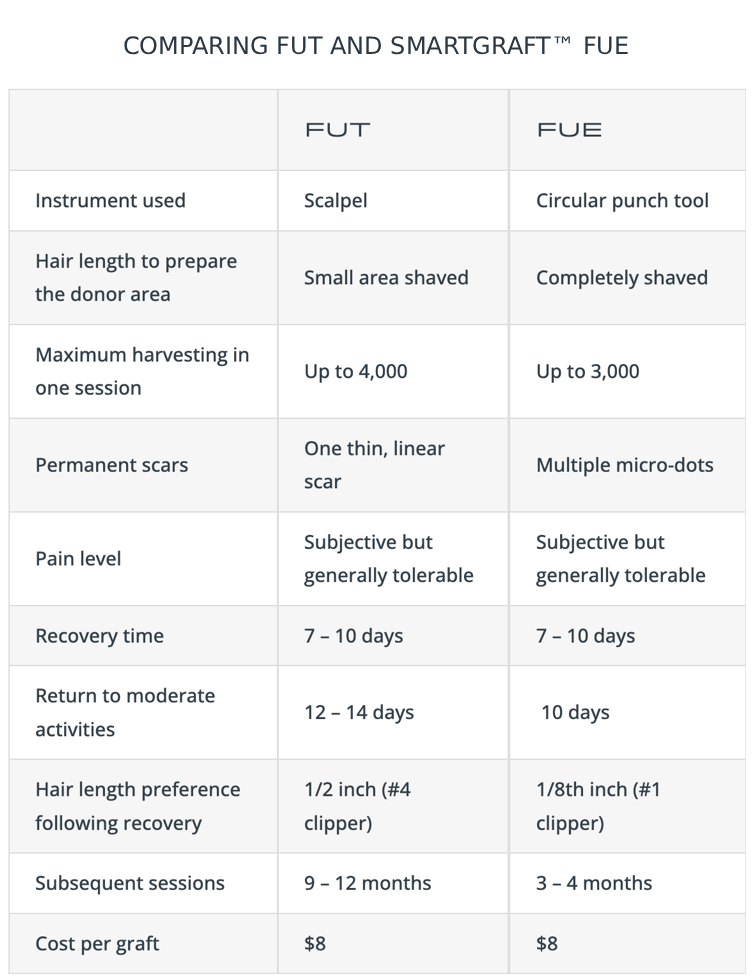
FUT vs. SmartGraft™ FUE Differences
Which Hair Transplant Procedure Is Right for You?
If you’re considering a hair transplant, the first—and most important—step is your initial consultation. This is where the journey begins. During this one-on-one visit, Dr. Yaker will take the time to understand your hair restoration goals, evaluate your scalp and donor area, and create a customized surgical plan tailored to your needs.
FUT vs. SmartGraft™ FUE: What’s the Difference?
Both FUT (Follicular Unit Transplantation) and SmartGraft™ FUE (Follicular Unit Extraction) are advanced, effective methods that produce natural, long-lasting results. While the outcomes of either technique can be excellent, the differences lie in how the hair is harvested, how much hair can be transplanted at once, and what kind of scarring you can expect.
So… Which One Should You Choose?
There’s no one-size-fits-all answer—and that’s okay.
The best procedure for you depends on your hair type, goals, lifestyle, and how much coverage you’re hoping to achieve. During your consultation, Dr. Yaker will walk you through both options, explain the pros and cons in detail, and recommend the method (or combination) that’s right for you.
Remember: the technique is only one part of the equation.
Why the Surgeon You Choose Matters Most
Choosing the right hair restoration surgeon is just as important as choosing the right procedure. When done correctly, a hair transplant should look so natural that even your barber or stylist won’t be able to tell. The artistry, skill, and precision behind each graft placement are what make the difference between results that look “done” versus results that look like you were never losing hair in the first place.
To see what’s possible, browse through our before-and-after gallery featuring real patients who have undergone both FUT and SmartGraft™ FUE procedures with Dr. Yaker. Their transformations speak for themselves.
Hair Transplant Surgery Gallery
Ready to Take the Next Step?
If you’re ready to explore your options and finally do something about your hair loss, we invite you to schedule a consultation. Dr. Yaker and his team are here to guide you every step of the way, with compassionate care, advanced techniques, and results that speak for themselves.