
Protect Your Investment: Why Surgery Alone Is Not Enough
It’s a common misconception: “If I get a hair transplant, I don’t need medication.”
That’s simply not true.
Hair transplants don’t treat the root cause of androgenetic alopecia (pattern hair loss). This condition is progressive, which means you’ll likely continue losing your native hair over time—even after surgery.
To protect your results and prevent future loss around the transplant:
- To get the best long-term results, you’ll need to start—and stay on—DHT-blocking medications like finasteride or dutasteride. When combined with minoxidil, this duo forms the most effective treatment plan for preserving the hair you still have
- These treatments help slow or stop ongoing hair loss, creating a stable foundation for any surgical plan
- They rethicken thinning areas, making your native (non-transplanted hair) closely match the thickness of your transplanted hair
- Without them, you risk having to chase your hair loss with multiple transplants, which can eventually leave you without enough donor hair to work with
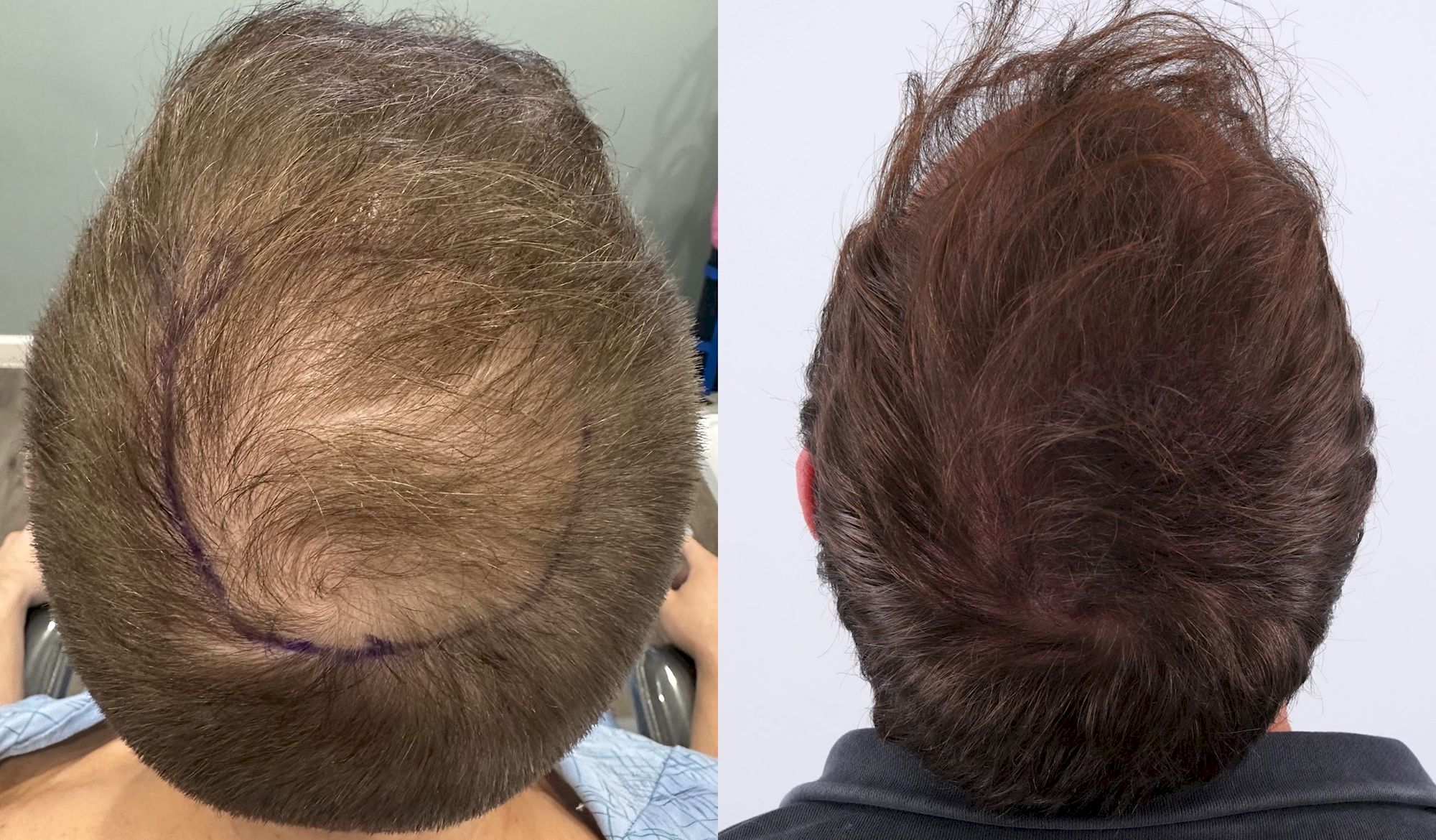
Ethical Surgeons Don’t Rush You Into Surgery
Even if you’re eager for a quick fix, a good surgeon will press pause if surgery isn’t in your best interest—especially if you’re not willing to use medical therapy.
In fact, the most experienced and ethical doctors will encourage you to:
- Evaluate your scalp to rule out any conditions that could cause or contribute to your loss
- Order blood work to rule out any hormonal or nutritional deficiciencies
- Get on a solid medical regimen first
- See how your hair loss responds over time with compliant medical management
When the timing is right, and the plan is personalized to your unique needs, hair restoration can look incredibly natural and last for years. The best outcomes come from partnering with a doctor who treats hair loss like the chronic condition it is—because that’s how you protect your investment and get the results you’re after.
But rushing into surgery too soon? That can cost you time, money, and results.
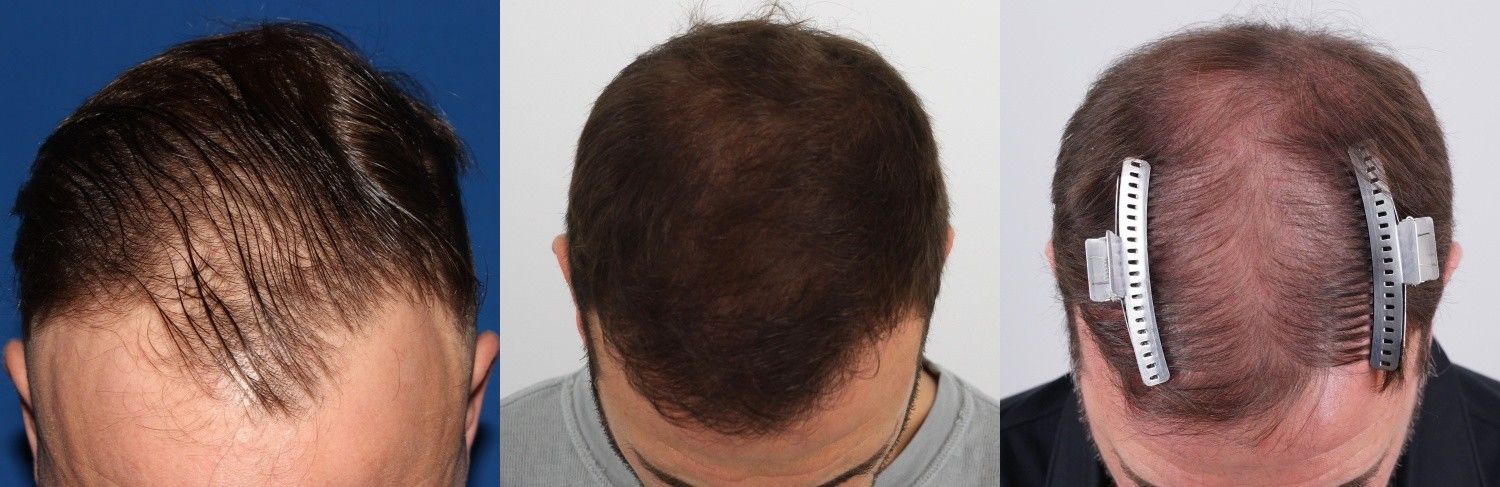
2. Post FUE 2,000 grafts to his hairline and frontal scalp with medication
3. More loss 2 years after surgery and after stopping medication