
Hair transplant surgery isn’t just about moving hair—it’s about designing a natural-looking result that lasts. To make that happen, we need to understand two key areas: the donor area (where we take the hair from) and the recipient area (where we place the hair).
What Is the Donor Area?
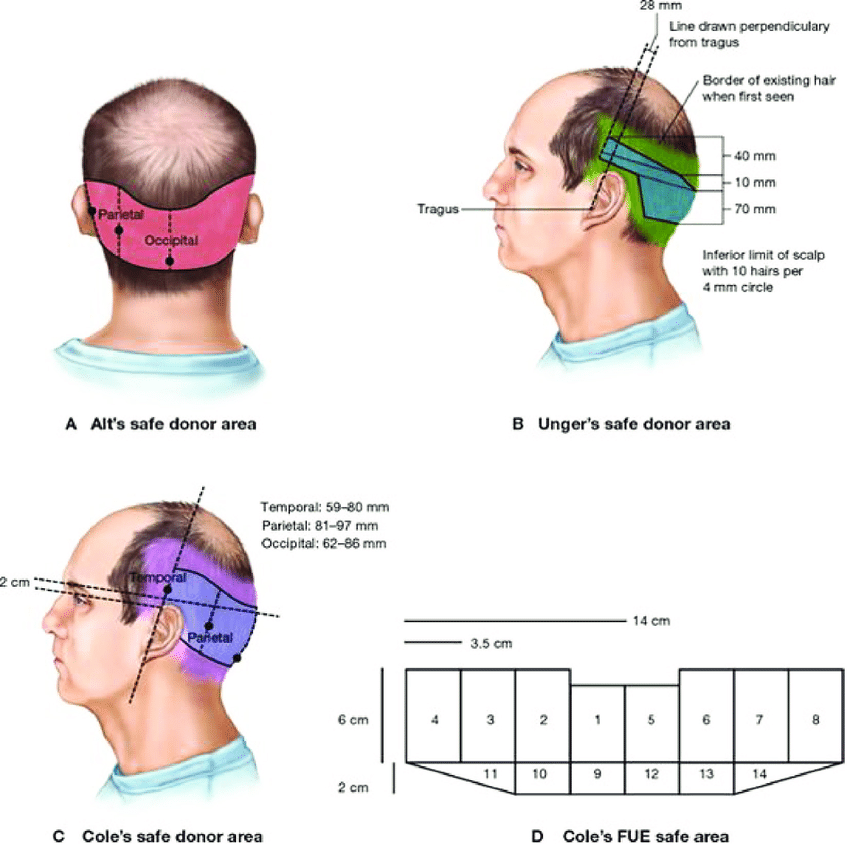
The donor area refers to the permanent zone—usually the back and sides of your scalp—where hairs are genetically resistant to balding. These hairs are ideal for transplanting because they keep growing even after being moved to bald areas.
But not everyone’s donor area is the same. Factors like head size, scalp flexibility (laxity), and hair density all determine how many grafts we can safely harvest.
Why Donor Area Evaluation Matters
A successful transplant balances art and science. Before designing your hairline or filling in thinning zones, we take precise measurements to calculate:
- How many grafts are available
- How many are needed
- What’s realistic for coverage and density
This ensures your donor area remains healthy and untouched-looking—especially if you need future treatments.
During your consultation, we evaluate several key features:
1. Hair Density
More density = more available grafts.
If your donor area has fewer hairs per square centimeter, this may limit how much area we can cover in one session.
2. Hair Type
Curly or thick hair gives the illusion of fuller coverage.
Why? Because curls add volume and lift off the scalp, while thicker strands block more light and hide the scalp better than fine, straight hair.
3. Hair Color vs. Scalp Color
High contrast (e.g., black hair on fair skin) makes thinning more noticeable.
Low contrast (e.g., blonde or gray hair on light skin) helps camouflage scalp visibility, creating the appearance of fuller hair—even if density is the same.
4. Scalp Laxity
A looser (more mobile) scalp allows for easier harvesting of donor grafts with less tension or trauma. Tight scalps can be more challenging and limit the number of grafts that can be safely removed.
What Is the Recipient Area?
The recipient area is where the new hair goes. This includes common thinning zones like:
- The hairline
- Temples
- Frontal scalp
- Mid-scalp
- Crown
Our goal here is simple: make it look natural and full. That means placing each graft with precision, following your natural growth pattern, and creating seamless transitions between transplanted and native hair.
A well-designed recipient area doesn’t just restore hair—it restores confidence.