
Spironolactone, prescribed under the brand name Aldactone®, was FDA-approved in 1960 to treat high blood pressure, water retention, and swelling caused by kidney, liver, or heart failure.
Off-Label Use
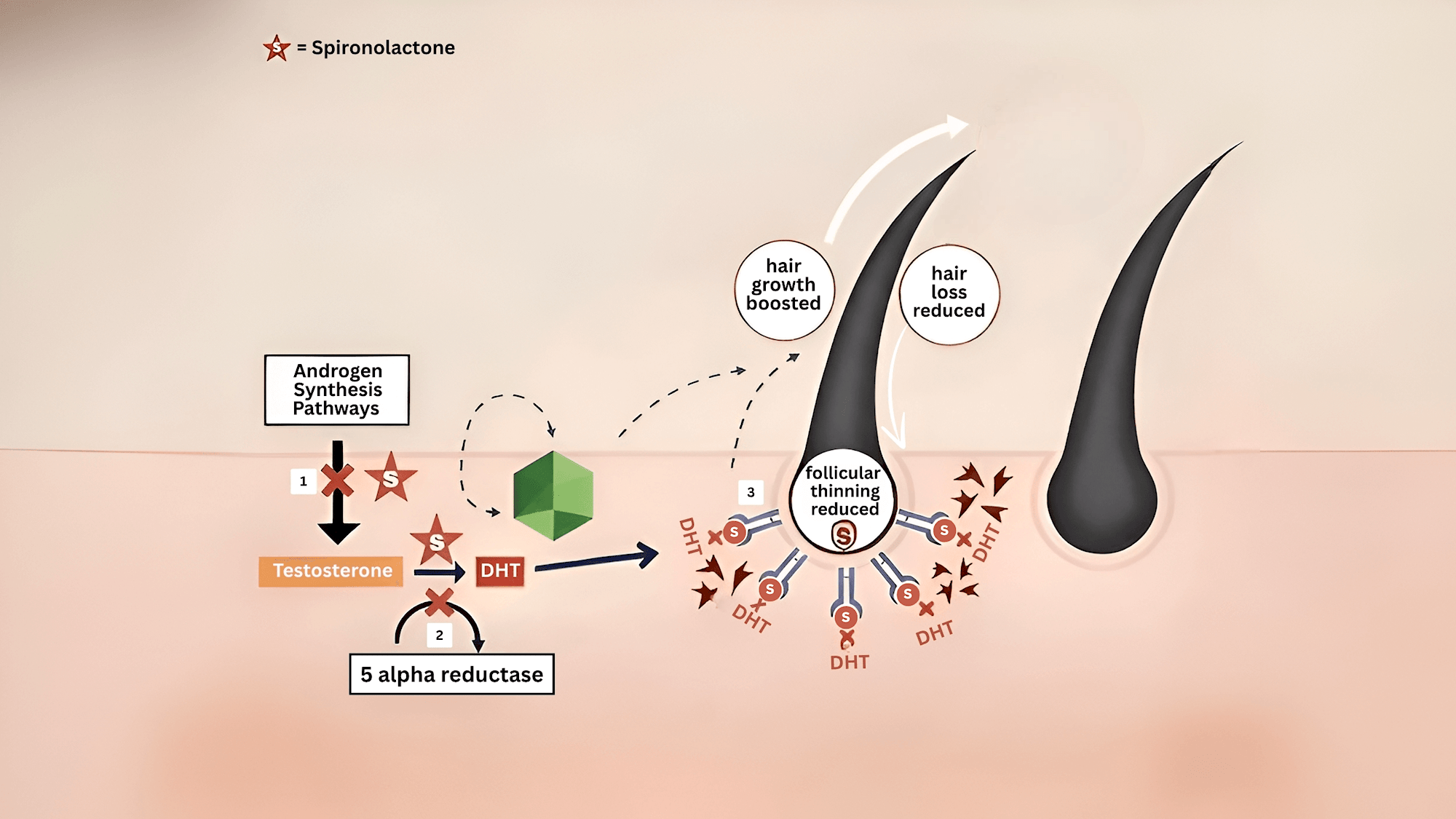
While initially used to treat heart conditions, spironolactone was also found to have anti-androgen (male hormone) properties. It decreases testosterone levels and blocks DHT from binding to androgen receptors, reducing oil (sebum) production and preventing hair follicle miniaturization. One study found that spironolactone can lower testosterone levels in men by 50–60% within just nine hours.
Dermatologists often use it to treat the following skin and hair conditions:
- Excessive unwanted hair: This condition, which causes more body or facial hair than usual, is often seen in women with polycystic ovarian syndrome (PCOS)
- Oily skin (face and scalp): This medication helps to reduce excess oil, which can clog pores and cause skin issues
- Hormonal acne: It can also reduce acne related to hormone imbalances
While spironolactone is often used in women to treat hair loss or acne, it’s not recommended for men. That’s because it lowers testosterone levels and can cause unwanted effects like breast enlargement, low libido, and impotence.
How Does Spironolactone Work for Hair Loss?
Spironolactone works similarly to medications like finasteride and dutasteride in that it blocks the effects of DHT, the hormone responsible for shrinking hair follicles and contributing to hair loss in conditions like androgenetic alopecia (genetic hair loss).
However, spironolactone works a bit differently. While finasteride and dutasteride reduce the conversion of testosterone into DHT, spironolactone actually lowers testosterone levels, leading to less DHT being produced overall. Because of its ability to block androgens (male hormones), spironolactone is a good treatment for female pattern hair loss (FPHL), but it is not suitable for treating male hair loss (male AGA).
Oral spironolactone has a bioavailability of about 60-90%, meaning this percentage of the drug enters your bloodstream to have its intended effect, and taking it with food can enhance its absorption. The medication starts to absorb into your system approximately 2.5 to 4 hours after taking it, with full absorption completed within 24 hours.
The typical dosage for FPHL ranges from 25 to 200 mg per day. However, several studies have shown that women with female pattern hair loss (FPHL) experienced improved hair density and reduced hair loss when taking 100-200 mg. But these higher doses may be harder to tolerate because of increased risk of side effects.
Effectiveness of Oral Spironolactone for Female Pattern Hair Loss
Three studies show that oral spironolactone helps many women with female pattern hair loss when used alone. Around 40-50% of women experienced improved hair growth, while 30-40% saw their hair loss stop without new growth. The doses ranged from 25 to 200 mg daily, with most patients taking between 80 and 110 mg, either alone or combined with other treatments.1,2,3
Topical Spironolactone for Hair Loss
Topical spironolactone, like minoxidil, is applied twice daily directly to the scalp to treat hair loss. It comes in two forms: a 1% gel or a 5% solution. Using spironolactone topically has far fewer side effects than taking it orally, making it a safer option for addressing hair loss.
In one study, 80% of patients who used a 1% topical spironolactone gel for 12 months showed improvement in hair growth, as assessed by scalp photography.
This study reported that topical spironolactone has very low systemic absorption.
Spironolactone with Combination Therapies
Six studies examined using spironolactone combined with other treatments, such as topical or oral minoxidil, low-level laser therapy, iron supplements, and other female pattern hair loss treatments. Of those treated, 94.5% showed positive results after combination therapy.4,5,6,7,8,9
Side Effects with Spironolactone
The side effects of oral spironolactone for treating female pattern hair loss can vary depending on the dosage and individual sensitivity. Studies show that side effects were more likely in individuals taking 100mg or more daily. Some of the most common and potential side effects include:
- Rash
- Headache
- Dizziness
- Low blood pressure
- Nausea
- Fatigue
- Menstrual irregularities: like mid-cycle spotting, are common with spironolactone use, but these can often be minimized by taking oral contraceptive pills alongside the medication
- Breast tenderness
- Decreased libido
- Increased urination
- Increased potassium levels (hyperkalemia):This is the most concerning side effect. However, this is usually insignificant in healthy patients. Up to 13.7% of patients may experience a slight rise in their potassium levels
Important: Regular monitoring of potassium levels and blood pressure is important for patients taking spironolactone, especially at higher doses, to prevent potential complications.
Who Should Avoid Spironolactone
Certain individuals should avoid oral spironolactone due to potential health risks or contraindications.
People who fall into the following categories are typically advised to avoid this medication:
- Pregnant or breastfeeding
- Kidney disease or impaired kidney function
- Spironolactone can affect how the kidneys process potassium, leading to dangerous potassium levels in the blood (hyperkalemia) in those with kidney disease
- High potassium levels (Hyperkalemia)
- Since spironolactone can raise potassium levels, it should not be used by people who already have high potassium levels or are at risk for hyperkalemia
- Use of potassium supplements or other potassium-sparing diuretics
- Since spironolactone increases potassium levels, using potassium supplements or other potassium-sparing diuretics can lead to dangerously high potassium levels
- Addison’s Disease
- People with Addison’s disease, a condition where the adrenal glands do not produce enough hormones, should avoid spironolactone due to its effects on hormone levels and potassium regulation
- Severe liver disease
- Individuals with severe liver disease or cirrhosis may be at higher risk for complications from taking spironolactone, particularly related to fluid balance and electrolyte levels
- Spironolactone may interact with certain medications, such as:
- Blood pressure medications:
- ACE inhibitors (e.g., lisinopril, enalapril)
- Angiotensin receptor blockers (e.g., losartan, valsartan)
- NSAIDs (e.g., ibuprofen, advil, motrin, aleve, naproxen)
- Other potassium-sparing diuretics (e.g., eplerenone)
- Blood pressure medications:
- Men
- Due to its anti-androgenic effects (blocking testosterone), spironolactone is not recommended for use in men with male pattern baldness, as it may cause feminizing side effects like breast enlargement, low libido, and impotence
Before considering treatment, weigh the risk and benefits with your hair loss specialist.