
A Light-Based Boost for Hair and Healing
Low Level Laser Therapy, often called LLLT or cold laser therapy, is a safe, noninvasive treatment that uses low-energy red or near-infrared light to help your cells heal, reduce inflammation, and improve blood flow.
A Quick Backstory
LLLT was first discovered in the 1960s when a scientist in Hungary noticed that laser-treated mice regrew hair faster. That led to broader medical uses—from healing skin wounds to easing joint pain. Today, it’s used for everything from sports injuries to nerve repair—and yes, even hair restoration.
How It Works
Think of it like “charging up” your cells.
- The laser light doesn’t cause heat or burn the skin
- Instead, it stimulates cell repair and energy production, helping tissues heal
- It also boosts blood flow, which is essential for delivering oxygen and nutrients to damaged or weakened areas—like hair follicles
Why It Helps with Hair Loss
Hair follicles that are struggling due to genetics or inflammation can respond well to LLLT. The red light helps:
- Reactivate weakened follicles
- Reduce inflammation in the scalp
- Extend the hair growth (anagen) phase
- Improve the thickness and density of hair over time
The Science of the Light
- Wavelength matters. The most effective wavelengths fall between 650 and 1200 nanometers (nm)—these can reach deep enough to stimulate tissue without causing harm
- These wavelengths are absorbed by the cells’ energy centers (mitochondria), which helps spark cellular repair and growth. 1
How Low-Level Laser Therapy (LLLT) Helps with Hair Loss
Using Light to Wake Up Hair Follicles
Low-Level Laser Therapy (LLLT) is a science-backed, noninvasive treatment that uses red light to help energize hair follicles and support natural hair regrowth.
What Does It Do?
Think of LLLT as a gentle recharge for your scalp. It works at the cellular level by: 2,3,4
- Activating mitochondria (the “power plants” inside your cells) to boost energy (ATP) production
- Reducing oxidative stress, a major contributor to hair thinning
- Increasing nitric oxide, which opens blood vessels and improves circulation to the scalp
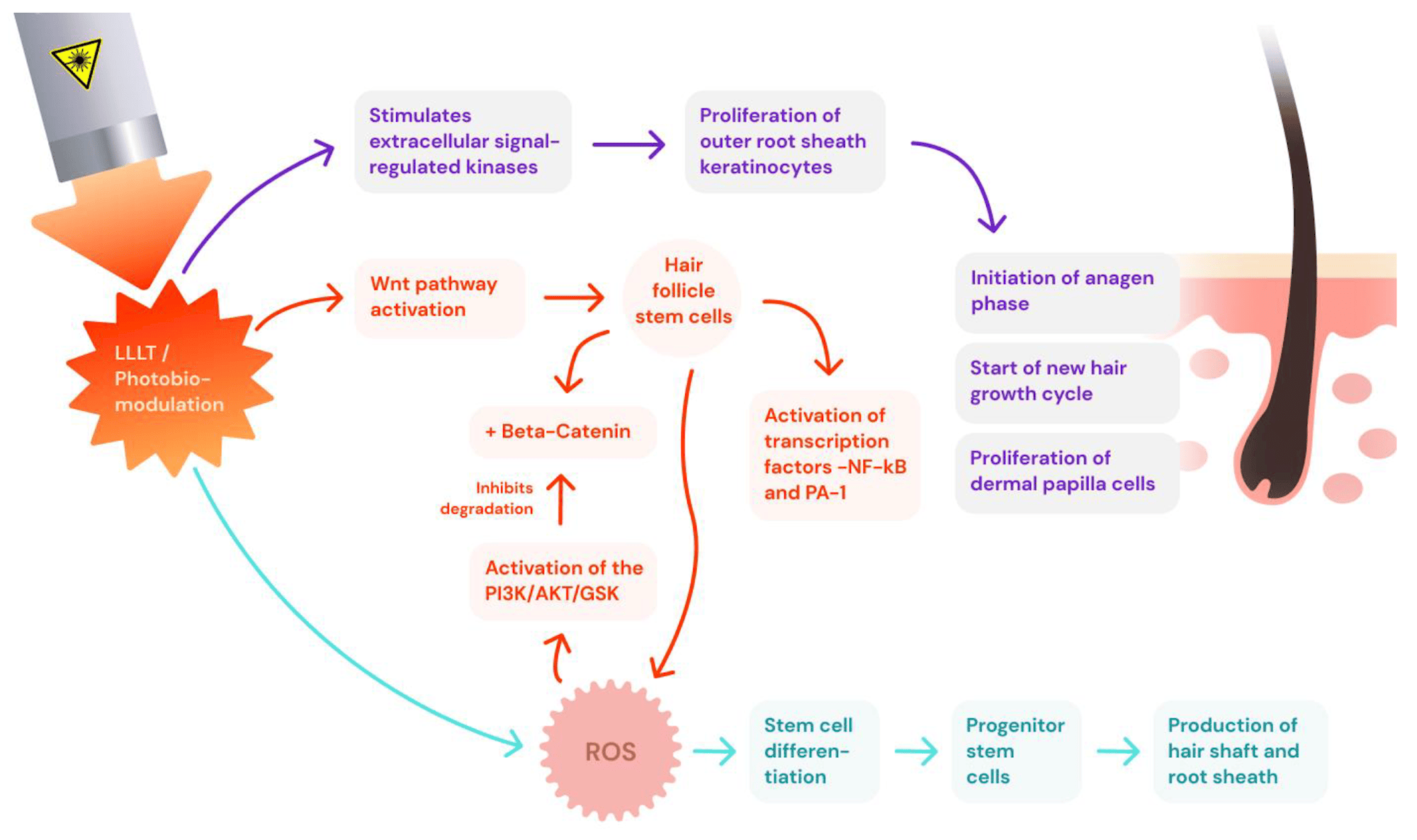
This combination creates a healthier environment for hair to grow.
How It Works
When laser light hits your scalp: 5,6,7,8
- The energy gets absorbed by stem cells in the dermal papilla, the base of your hair follicle
- These cells regulate your hair growth cycle—how fast hair grows, how long it stays in the growth phase, and when it falls out
- LLLT helps extend the growth phase (anagen), slow down follicle shrinking, and boost the thickness and quality of hair
It also improves blood flow, bringing in more oxygen and nutrients to feed your hair follicles—like watering the roots of a thirsty plant.
Inflammation Control
Hair loss is often associated with low-grade inflammation around the hair follicles. LLLT helps by: 9,10
- Calming inflammation
- Supporting the immune system’s balance
- Creating a healthier scalp environment for hair to grow back stronger
Why Laser Diodes Matter More Than LEDs
Some devices use LED lights, which are great for treating surface skin (like wrinkles or acne).
But hair follicles sit deeper below the scalp.
- LEDs spread out light and don’t penetrate deeply enough to reach those follicles
- Laser diodes, on the other hand, produce focused, high-energy light that penetrates deep into the scalp—right where your hair follicles need it
The most effective wavelengths for LLLT fall between 630 and 660 nanometers (nm)—just the right range to reach the follicles and stimulate growth.
How Effective Is Laser Therapy for Hair Loss?
Low-Level Laser Therapy (LLLT) is gaining recognition as a safe, non-invasive option for treating genetic hair loss—also known as androgenetic alopecia (AGA)—in both men and women.
From Clinic to Home: How It Evolved
Laser therapy for hair started in clinics with large, stationary hood devices. These were hard to use consistently and didn’t always target the scalp well. That changed in 2007 when the FDA cleared the HairMax® LaserComb for treating male pattern hair loss—and again in 2011 for female pattern hair loss. Since then, portable and easy-to-use laser helmets, caps, and combs have made LLLT more accessible at home.
What the Research Says
Here’s a quick breakdown of major studies showing how LLLT helps:
HairMax® LaserComb Study
- Study Design: Prospective, single-arm (pre–post) study
- Participants: 35 adults with AGA (28 men, 7 women)
- Duration: 6 months
- Regimen: 655-nm LaserComb, 5–10 min every other day (home use)
- Key Findings (vs. each patient’s own baseline):
- Terminal hair count (overall): +93.5%
- Hair tensile strength (overall): +78.9%
- By area & sex (hair count): temporal +55.2% (women), +74.1% (men); vertex +64.9% (women), +120.1% (men); both sexes improved, and the crown in men improved the most
- By area & sex (tensile strength): temporal +82.6% (women), +64.4% (men); vertex +71.1% (women), +89.3% (men); overall increases across areas and sexes
Kim et al.
- Study Design: Randomized, double-blind, sham device–controlled clinical trial
- Participants: 40 subjects with androgenetic alopecia (AGA)
- Duration: 6 months
- Regimen: Helmet-type LLLT device (wavelengths 630, 650, 660 nm) for 18 minutes daily vs. sham device (placebo)
- Key Findings:
- The LLLT group had significantly greater hair density (mean increase of ~10.21 ± 3.25 hairs/cm²) after 24 weeks compared to the sham group (3.95 ± 1.32 hairs/cm²)
- Mean hair diameter improved statistically significantly more in the LLLT group (6.11 ± 2.15 μm) vs. sham (3.76 ± 1.24 μm)
- Investigator global assessment (i.e. clinicians’ ratings of regrowth) showed a significant difference favoring LLLT over sham
- No serious adverse reactions were detected during the study
Pllai Study
- Study Design: A meta-analysis of FDA-approved home-use LLLT devices (7 double-blinded randomized controlled trials).
- Participants: Variable based on the study
- Duration: Variable based on the study
- Key Findings:
- A standardized mean difference (SMD) in hair density of 1.27favoring LLLT over placebo
- LLLT was associated with an increase of ~16.62 terminal hairs/cm² in women and ~18.75 terminal hairs/cm² in men (vs. placebo)
- LLLT appears promising as a noninvasive, safe, and potentially effective therapy for androgenetic alopecia, particularly in patients who do not respond or are intolerant to standard treatments
- Combining LLLT with established therapies (topical minoxidil, oral finasteride) may enhance hair regrowth outcomes
- But currently, LLLT should be viewed as a complementary modality rather than a replacement for standard therapies, until more robust evidence is available
- LLLT has a very favorable safety profile; reported adverse effects are minimal
Lanzafame et al.
- Study Design: Double-blind, randomized, sham-controlled RCT of a 655-nm laser/LED helmet for male androgenetic alopecia; self-treat every other day for 25 min
- Participants: 44 enrolled; 41 completed (22 active, 19 sham)
- Duration: 4 months (~60 treatments)
- Key Findings:
- Post-treatment hair counts:
- Active 228.7 ± 102.8 vs Sham 162.4 ± 62.5 hairs per 2.85 cm²
- Percent increase from baseline: Active 67.2% ± 33.4 vs Sham 28.4% ± 46.2; (~ +39 percentage-points advantage for active)
- Hair counts had a higher percent increase in Active 67.2% vs Sham 32.3% (~ +35 percentage-points).
- Safety: No adverse events or side effects reported
- Post-treatment hair counts:
Jimenez et al.
- Study Design: Multicenter, randomized, double-blind, sham-controlled randomized controlled trial testing the HairMax LaserComb (various beam counts) in male and female pattern hair loss
- Participants: 128 men and 141 women randomized
- Duration: 26 weeks; treatment 3× per week to the whole scalp
- Key Findings (change in terminal hair density, hairs/cm²):
- Women (9-beam): +20.2 vs +2.8 with sham
- Women (12-beam): +20.6 vs +3.0 with sham
- Men (7-beam): +18.4 vs +1.6 with sham
- Men (9-beam): +20.9 vs +9.4 with sham
- Men (12-beam): +25.7 vs +9.4 with sham
- Other Findings:
- Benefits were independent of age, sex, and device model; more laser-treated subjects reported better overall hair condition/thickness than sham
- No serious adverse events were reported
Darwin et al.
- Study Design: Review of 13 clinical trials testing low-level laser/light therapy (LLLT) for androgenetic alopecia
- Participants: Variable based on the study
- Duration: Most randomized trials lasted 16–26 weeks
- Key Findings:
- 10 out of 11 clinical trials showed positive results with LLLT
- Some trials found added benefit with minoxidil; one showed benefit alongside finasteride.
Liu et al.
- Study Design: Systematic review and meta-analysis of 8 studies comprising 11 double-blind randomized controlled trials on LLLT for androgenetic alopecia (AGA)
- Participants: Variable based on the study
- Duration: 16–26 weeks
- Key Findings:
- Studies involving several hundred participants showed that LLLT significantly increased hair density in men and women, no matter the device type or duration
Afifi et al.
- Study Design: Systematic review of 11 clinical studies on low level laser therapy (LLLT) for androgenetic alopecia (AGA)
- Participants: 680 total (444 men, 236 women)
- Duration: 16–26 weeks
- Key Findings:
- 9 out of 11 studies showed improved hair count and density
- 2 of 4 studies saw better hair strength and thickness
- Across studies in the review, no serious adverse events were reported.
Qiu et al.
- Study Design: Real-world observational study using an FDA-cleared low level laser (LLLT) helmet for androgenetic alopecia
- Participants: 1,383 adults
- Duration: 38–40 weeks
- Key Findings:
- About ~80% of users achieved a positive clinical effectiveness rating
- 52% of patients with mild AGA
- 58% of patients with moderate-to-severe AGA.
Bottom Line
- Increase hair density and thickness
- Improve hair strength and overall scalp health
- Be effective for both men and women
- Minimal side effects (like mild itching or temporary shedding)
It’s especially helpful for patients in the early to moderate stages of genetic hair loss. And because it’s drug-free, it’s often used alongside other treatments like minoxidil and finasteride.
Low-Level Laser Therapy (LLLT) doesn’t have to work alone. In fact, pairing LLLT with other proven treatments like minoxidil or finasteride can lead to even better results than using just one treatment by itself. 13,14
Why Combination Therapy Works Better
Think of your hair follicles like a struggling garden. LLLT is like giving sunlight and fresh air—boosting energy and improving the environment. Minoxidil and finasteride are like fertilizer and weed control—helping nourish the roots and block harmful factors like DHT. When used together, they create the ideal conditions for stronger, healthier growth.
What the Research Shows
Esmat et al.
- Study Design: Randomized controlled trial in female pattern hair loss with 3 arms:
- Minoxidil 5% twice daily
- LLLT helmet (iGrow®) 25 min, 3 times per week
- Combination of both
- Participants: 45 women
- Duration: 16 weeks
- Key Findings: Patients who used both LLLT and 5% topical minoxidil had:
- The best hair growth (follicle counts: +27.9 ± 6.3)
- The highest satisfaction
- Visible results in just 4 months
Zhou et al.
- Study Design: Systematic review + meta-analysis of 15 studies using combination therapies for androgenetic alopecia (AGA) that include topical minoxidil
- Participants: 1,172 total patients pooled
- Duration: 16-26 weeks, based on the study
- Key Findings: Combination therapy beat topical minoxidil alone for hair regrowth
- Finasteride + minoxidil vs. minoxidil alone → better global photo scores
- Low-level laser therapy + minoxidil vs. minoxidil alone → better global photo scores and higher hair counts
- Microneedling + minoxidil vs. minoxidil alone → better global photo scores and higher hair counts
Faghihi et al.
- Study Design: Randomized clinical trial comparing minoxidil 5% + low level laser therapy vs. minoxidil 5% + sham; outcome assessor was blinded
- Participants: 50 adults
- Duration: 6 months
- Key Findings: Adding low level laser therapy to minoxidil treatment resulted in
- Thicker, denser hair
- Overal average % hair count increase: 78.3% (LLLT) vs. 51.3% (control)
- Overall mean % increase in diameter: 45.4% (LLLT) vs. 32.3% (control)
- Greater patient satisfaction
- Thicker, denser hair
Bottom Line
Combining LLLT with medications like minoxidil or finasteride:
- Speeds up hair growth
- Improves thickness and density
- Helps you get better results with fewer setbacks
If you’re already on a hair loss treatment, adding LLLT may help you reach your goals faster and more effectively. Always talk to your provider about the right combination for your needs.
How Laser Therapy Helps Other Types of Hair Loss
Low-Level Laser Therapy (LLLT) isn’t just for genetic hair loss. It’s also showing promise in treating other forms of hair thinning and shedding—even in more complex cases. 15
Think of LLLT as a gentle, healing light that wakes up tired hair follicles and helps them thrive again.
Alopecia Areata
A patchy kind of hair loss caused by the immune system attacking hair follicles.
Supported by multiple clinical studies, LLLT has been shown to: 16,16,18,19,20
- LLLT calms inflammation and stimulates the follicles to start growing hair again
- It boosts blood flow and brings in more oxygen and nutrients—like delivering a care package to stressed-out follicles
- Helps restart the hair growth cycle naturally
Telogen Effluvium
A temporary shedding often triggered by stress, illness, or hormonal changes.
- LLLT helps “reset” the hair cycle, nudging follicles back into the growth phase
- Improves circulation to the scalp, helping hair recover faster and stronger
Backed by growing clinical evidence. 21,22
Chemotherapy-Related Hair Loss
Hair loss caused by cancer treatments.
- LLLT may help activate stem cells in the hair follicle bulge, a key area responsible for hair growth
- Encourages follicles to shift back into the anagen (growth) phase more quickly after treatment
Multiple studies have shown encouraging results. 23,24
Scarring Alopecia (like Lichen Planopilaris or FFA)
Hair loss due to inflammation and scarring of the scalp.
- While more challenging to treat, LLLT may help in early or mild cases
- It improves blood flow, reduces inflammation, and may support healing in the affected areas
- Some patients have experienced regrowth or stabilization
Several studies highlight its potential benefits.25,26,27,28
Bottom Line
LLLT is a versatile, non-invasive therapy that can support hair regrowth across multiple types of hair loss. While it works best in earlier stages, especially when inflammation is present, it’s a safe and supportive tool that can be added to many treatment plans.
LLLT After Hair Transplant: Why It Matters
Low-Level Laser Therapy (LLLT) is a powerful addition to hair transplant recovery.29 It works at the cellular level to support healing and boost long-term results. Adding LLLT to your hair transplant journey can make a real difference in how well, and how quickly, you heal and see results.
Speeds Up Healing
LLLT enhances blood flow and reduces inflammation, helping your scalp heal faster with less redness, swelling, and discomfort.
Improves Graft Survival
LLLT improves the survival rate of transplanted hair by:
- Improving blood flow to nourish grafts
- Increasing oxygen and nutrients to the follicles
- Reducing inflammation
- Creating a healthier environment for growth
Studies have shown that using LLLT after surgery can increase graft survival rates, meaning more of your transplanted hairs take hold and grow in strong.
Smooth Recovery and Long-Term Support
Many patients continue using LLLT as part of their maintenance routine after surgery. It supports overall scalp health, reduces post-op shedding, and helps keep your hair growing thicker and fuller over time.
Bottom Line
LLLT is a safe, non-invasive tool that improves healing, increases graft success, and enhances long-term hair restoration results.
Want to Know if Laser Therapy Can Help You?
Schedule a consultation with Dr. Yaker to find out if Low-Level Laser Therapy (LLLT) is the right fit for your type of hair loss. He’ll take a close look at your scalp, listen to your concerns, and help you choose the best treatment plan for your goals.
Not All Lasers Are Created Equal: What Affects Results with LLLT Devices
Low Level Laser Therapy (LLLT) can be a powerful tool for treating hair loss—but its success depends heavily on the device being used and how it’s used. Think of it like baking: you need the right ingredients, at the right temperature, for the right amount of time. Here’s what matters most:
Wavelength of Light: How Deep the Light Travels
- The wavelength determines how deep the light can reach into your scalp
- The most effective range for stimulating hair follicles is 600–900 nanometers (nm)
- Most hair growth research focuses on 635–650 nm red light, which penetrates deep enough to wake up sluggish follicles and promote regrowth
- Lasers can be fine-tuned to this exact wavelength—making them ideal for hair treatment
Lasers vs. LEDs: Focused vs. Scattered Light
- Laser diodes emit a focused, powerful beam that goes deep into the scalp where it counts.
- LEDs produce scattered, less intense light that doesn’t penetrate deeply enough to reach the follicles effectively.
- Some companies mix lasers and LEDs (or use LEDs alone) because it’s cheaper, but you may sacrifice results.
- Lasers deliver up to 150x more energy than LEDs, especially at the critical 680 nm wavelength—making them the better choice for serious hair regrowth.
Power and Timing: Getting the Dose Just Right
- The energy level (measured in mW/cm²) and the length of treatment work together to trigger hair growth
- Too little power or too short a session = not enough stimulation
- Too much power or overly long sessions = risk of overstimulation, which can actually hinder results
- The sweet spot? Enough energy, delivered consistently, for the right duration—just like a well-measured recipe
Bottom Line
The right device makes all the difference. To get real results from LLLT, you need a high-quality device that uses pure laser diodes, operates at the right wavelength, and delivers the right amount of energy for the right duration. That’s how you turn light into lasting hair growth.
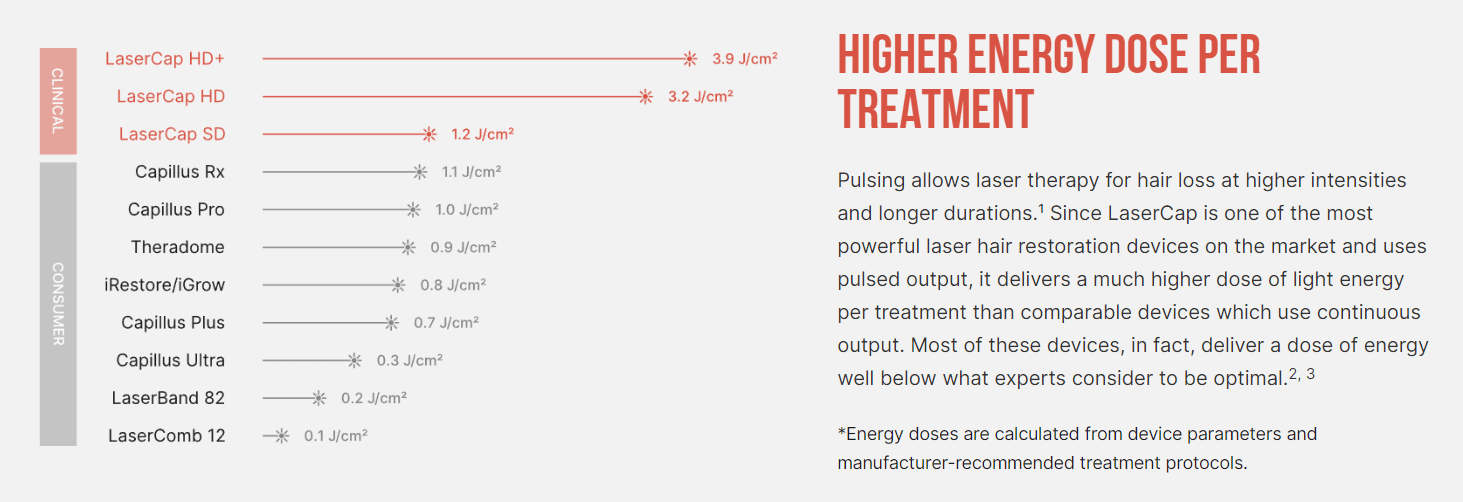
Device Quality
Not all laser caps or combs are created equal. Devices with more high-quality laser diodes and smart design (even spacing, full scalp coverage) deliver better results by evenly treating the scalp.
Stage and Type of Hair Loss
LLLT tends to work best in the early stages of hair loss. It’s also most effective for androgenetic alopecia (male and female pattern hair loss). If hair follicles have been inactive too long or are completely gone, laser therapy may not help as much.
Your Individual Traits
Your age, genetics, health, and scalp conditions all play a role. For example, someone with a healthier scalp and good circulation may respond better than someone with chronic inflammation or underlying health issues.
Combined Treatments Work Better
LLLT works even better when used with other proven treatments like:
- Minoxidil
- Finasteride or Dutasteride
- PRP (Platelet-Rich Plasma)
These combinations can boost hair growth and improve thickness.
Staying Consistent Is Key
Results don’t happen overnight. To see real improvements, you need to stick to the recommended schedule. Missing treatments or stopping too soon can limit results.
Bottom line
The right device, proper diagnosis, consistent use, and a personalized treatment plan can make all the difference in how well LLLT works for your hair.
LaserCap® HD+
Advanced Laser Therapy for Hair Regrowth—Right from Home
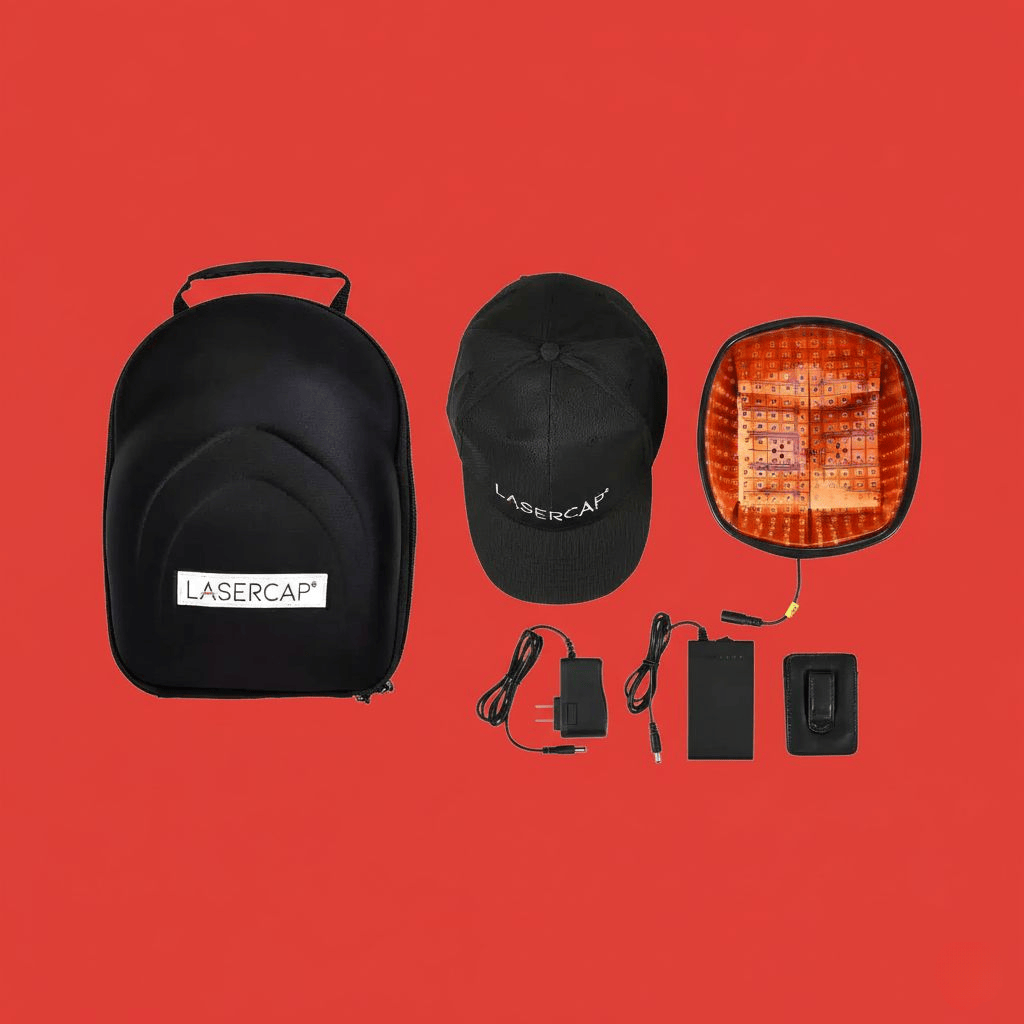
The LaserCap® HD+ is a lightweight, dome-shaped device designed to treat hair loss comfortably and effectively at home. It’s FDA-cleared and features 304 medical-grade laser diodes that deliver therapeutic 650nm red laser light directly to your entire scalp.
Why Only Lasers—Not LEDs?
Unlike some devices that mix lasers with cheaper LEDs, the LaserCap® HD+ uses only pure lasers. This matters because laser diodes produce a stronger, more focused light that reaches deep enough to stimulate hair follicles—something LEDs simply can’t do.
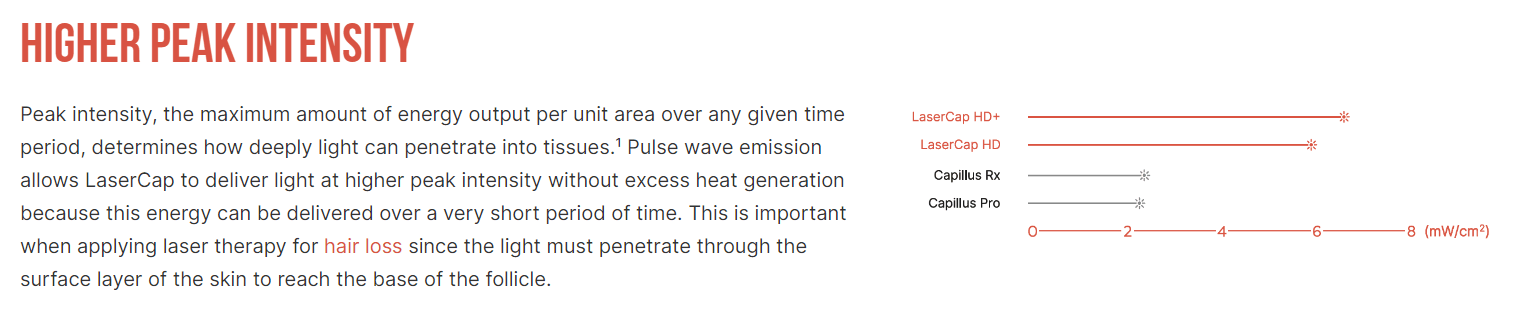
Pulse Power for Better Results
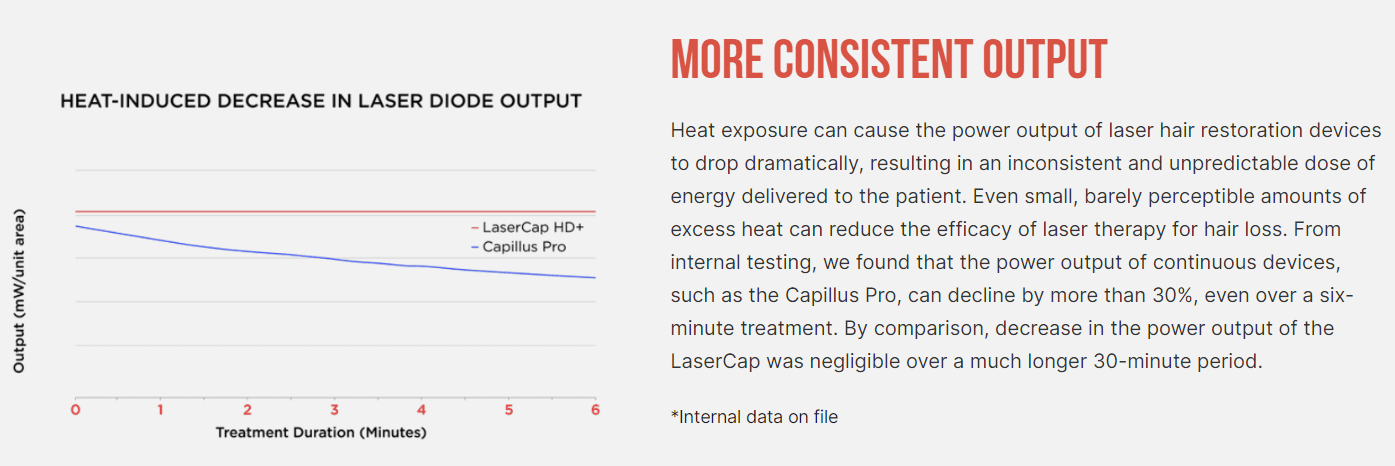
Instead of shining constantly, the LaserCap® uses pulsed light—blinking on and off rapidly.
Here’s why that’s important:
- Boosts intensity while keeping the device cool
- Delivers more energy to your scalp without overheating
- Prevents heat buildup, which can harm the user, lower effectiveness or damage the device
This smart pulsing design helps your hair follicles get the most benefit from each session—safely and comfortably.
Bottom Line
The LaserCap® HD+ delivers high-dose, pure laser energy across your whole scalp, promoting hair growth 30 with greater precision, comfort, and efficiency than many other devices on the market.
How to Use the LaserCap® HD+
The LaserCap® HD+ offers full-scalp, clinical-strength laser therapy that’s easy to use at home—or even on the go. Just place it on your head and wear it for 30 minutes, three to four times a week. That’s it.
What Makes the LaserCap® HD+ Different
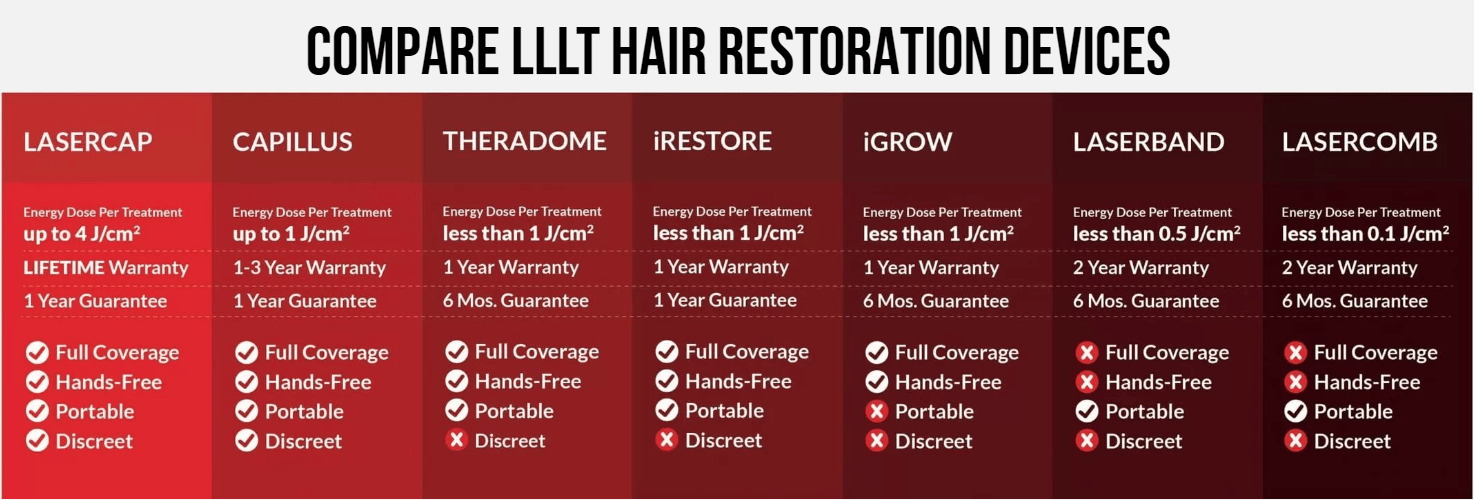
This device stands out from others on the market because it’s designed for power, durability, and real results:
- No LEDs – only medical-grade laser diodes
- Pulsed light therapy for better scalp absorption
- Higher energy dose per session
- Higher peak intensity
- Consistent output for reliable results
- Built to last, with improved durability
- Assembled in the USA (Ohio)
- Backed by a lifetime warranty
What to Expect
Hair regrowth doesn’t happen overnight. Most users begin to see visible improvement in 4 to 6 months, with continued gains over time. Results vary depending on how much hair loss you have when you start.
Important note: LLLT is not effective in areas that are completely bald. It works by revitalizing existing, weakened follicles—not creating new ones.
Best When Combined
The LaserCap® doesn’t lower DHT (the hormone linked to hair loss), so it’s best used alongside DHT-blocking medications like finasteride or dutasteride for maximum benefit.
Stay Consistent
Like brushing your teeth, LLLT only works if you keep using it. If you stop treatment, the benefits will gradually fade.
Are There Any Side Effects?
Low-Level Laser Therapy (LLLT) is safe, painless, and well-tolerated by most people. But like any treatment, a few mild side effects can occur.
Temporary Shedding
Some people may notice a bit of extra shedding after the first few sessions. Don’t worry—this is temporary.
It’s a natural part of the hair growth cycle as old hairs fall out to make room for stronger, healthier ones.
With continued treatment, this shedding stops and new growth begins.
Possible Side Effects:
- Dry scalp or slight irritation
- Mild itching
- Low-grade headaches
- A gentle warmth on the scalp during treatment (normal)
Want to see real results?
Click here to view success stories from LaserCap® HD+ patients.