
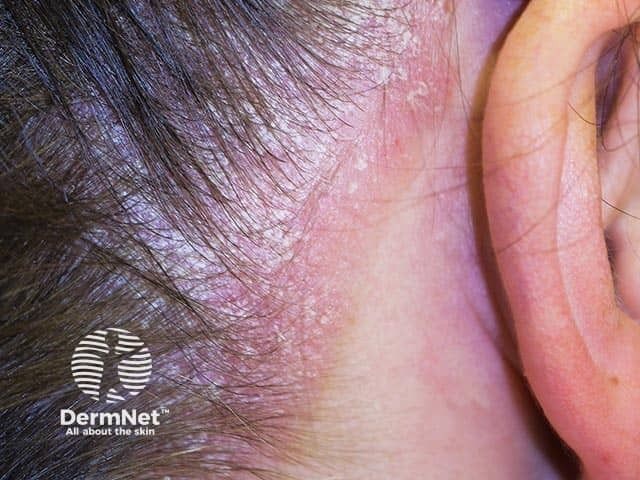
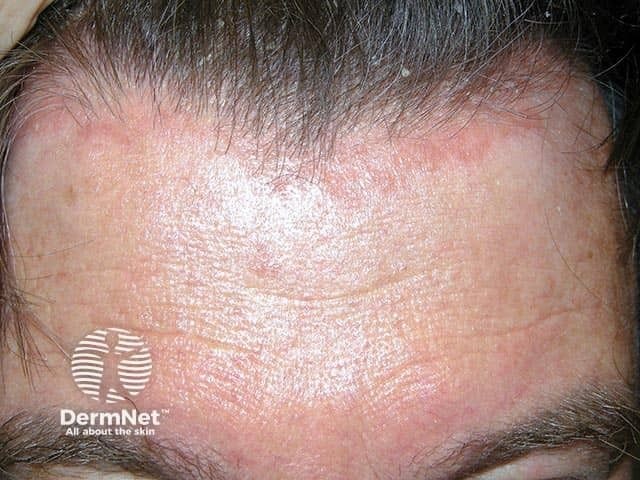
Scalp psoriasis is an autoimmune condition in which the immune system mistakenly attacks the skin, causing more than usual rapid skin cell turnover and buildup. The skin cells accumulate, leading to scaly patches anywhere on the skin. They may appear in small patches or cover the entire scalp, sometimes extending to the forehead, neck, or behind the ears.
Psoriasis is a complex condition influenced by genetics, the immune system, hormones, and environmental triggers. It affects about 2% of people worldwide and can develop at any age. The scalp is the most frequently involved area, with 50–80% of psoriasis patients experiencing symptoms there, and in some cases, the scalp may be the very first or even the only site affected.
Symptoms
- Thick white or silvery scales
- Scales can flake off, causing ‘dandruff’
- Red, inflamed patches
- Intense itching, dryness, or soreness
- Temporary hair shedding from inflammation or scratching
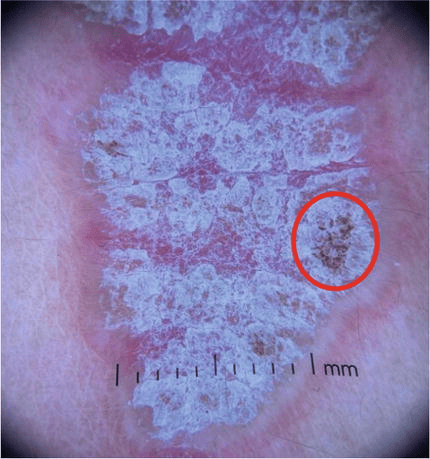
Dermoscopic Differential Diagnosis of Psoriasis. IntechOpen;
2022. DOI: 10.5772/intechopen.103004.
Trichoscopy typically shows regularly distributed vascular patterns (red dots, loops, hairpins, signet-ring vessels) combined with thick white scaling and interfollicular involvement—a key way to differentiate it from seborrheic dermatitis or lichen planopilaris.
Common Triggers
- Skin trauma (scratching, sunburn)
- Stress or emotional changes
- Infections
- Cold, dry weather
- Smoking, alcohol, and obesity
- Certain medications (e.g., lithium, beta-blockers for blood pressure control)
Disease Course
- Chronic and recurrent episodes; there is no cure to date
- Flare-ups followed by temporary remission
- Can lead to telogen effluvium (increased hair shedding due to inflammation)
Treatments
- Medicated shampoos (coal tar, ketoconazole, salicylic acid)
- Topical steroids or vitamin D analogs
- Moisturizing scalp oils
- UVB light therapy in some cases
- Prescription biologic or systemic medications (for severe cases)
Scalp psoriasis can be persistent, but it’s very treatable. With the proper care plan from a dermatologist, most patients can effectively manage their symptoms.